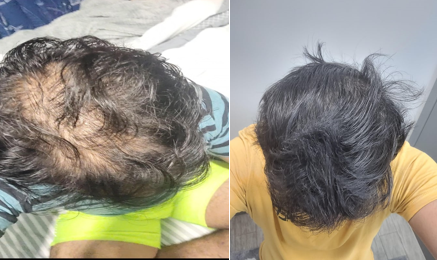
Can Finasteride cause depression?
Let's drop the door in the house right away: Yes, finasteride can cause mental side effects. But this is crucial, and the chances of you getting them are statistically extremely small.
Only 1-2% of men report mental side effects of finasteride. To put that in perspective: You have a better chance of getting a traffic accident on your way to the pharmacy to pick up your prescription than you actually get mental complaints from this drug.
Yet I get weekly worried messages from men who fear starting finasteride because of stories they have read online. Fear that is often unfounded, but understandable.
In this blog I go deep into what is really known about finastery and mental health, without dramatization or scaremaking. I want to give you an honest picture, so you can decide: is this the right solution to your hair loss?
Spoiler alert: for most men, finasteride is perfectly safe, effective, and a game-changer for their confidence. And to those who remain concerned: I introduce an alternative that you may not know yet.
This video of Haircafe explains it very well in my opinion.
The TRUTH about Finasteride and Depression
"Can I get depressed by finasteride?"
This is by far the most frequently asked question I get. Here's the unsugared answer:
The scientific consensus is not unambiguous. But most large-scale studies find no statistically significant relationship between finasteride use and depression.
FINASTERIDE & MENTAL SIDE EFFECTS
The facts behind the risk: what you need to know before you start
Although mental side effects are rare, it is important to know and monitor the risk, especially if you have previously experienced mental illness.
The risk of mental adverse reactions of finasteride compared to other common situations:
Important: These symptoms are rare but must be taken seriously. Stop using it and consult a doctor if you experience it.
| Aspect | Oral Finasteride | Topical Finasteride |
|---|---|---|
| Systemic absorption | 100% | ~10-15% |
| Risk of mental adverse reactions | 1-2% | ~0.2-0.3% (estimated) |
| Sexual side effects | 2-5% | ~0.5% (estimated) |
| Effectiveness | Very effective | Similar to oral |
| Application | 1 pill a day | Dagelijks aanbrengen |
| Availability | Easy access | Usually via dermatologist |
Topical finasteride offers an excellent alternative to people who are concerned about systemic side effects.
-
Have hormones tested before you start.
Test testosterone, DHT, oestradiol and thyroid function -
Start at a lower dose
Start with 0.5mg instead of 1mg -
Consider topical finasteride
Ask your dermatologist about this option -
Keep a symptom diary
Monitor your mood and mental state weekly -
Use a buddy system
Ask a trusted person to signal changes -
Plan a 3-month evaluation
Discuss your experience with your doctor -
Combine with natural DHT blockers
Saw palmetto, pumpkin kernel oil and green tea
In 2017, the Journal of Clinical Psychiatry published a study that looked at thousands of men and found no causal relationship between finasteride and increased risk of suicide, depression or anxiety.
But wait a minute. The American FDA added a warning about possible mental side effects in 2011.
What's going on here?
The FDA warning came from anecdotal reports, not solid scientific research. If a drug is used by millions of people, a small percentage will always report side effects . . . whether caused by the medicine or not.
The reality: The vast majority of finasteride users experience no mental problems.
But...

The "Mentale Mist" What Nobody Talks About
If we only look at depression, we miss a more subtle side effect that some men report: brain fog or mental fog.
So a client of mine described it: "It's like my brain is constantly spinning at 90% instead of 100%. Not enough to influence my work, but I feel the difference."
This is hardly mentioned in the scientific literature, and yet it regularly returns to forums and discussion groups.
How is this possible?
FINASTRIDE RISK CALCULATOR
Calculate your personal risk of mental side effects in 60 seconds 🧠
Based on your answers, you have an increased risk of mental side effects when using finasteride.
Given your personal risk profile, we recommend caution with the use of oral finasteride. Consider the following alternatives:
- Minoxidil 5% twice daily
- Ketoconazole shampoo (2-3× per week)
- Microneedling treatments (1× per week)
- Natural DHT blockers such as Saw palmetto
- Discuss laser/light therapy with a specialist
Based on your answers, you have an average risk of mental side effects when using finasteride. With appropriate precautions, you can probably safely use the medicine.
You can consider finasteride, but take these precautions:
- Keep a voting diary weekly
- Ask a neighbor to signal changes
- Have your hormone levels tested before you start.
- Plan an evaluation after 3 months of use
- Be extra alert in stressful periods
Congratulations! Based on your answers, you have a low risk of mental side effects when using finasteride. You can consider the medicine with confidence.
Your profile suggests you're a good candidate for finasteride. For optimal results:
- You can use the standard 1mg daily dose
- Be consistent Take it at the same time every day
- Expected results after at least 3-6 months
- Think of the long term best results after 1-2 years
- Take pictures of your hair every 3 months to follow progression
The answer is in the operation of finasteride. As a 5-alpha reductase inhibitor, it blocks the conversion of testosterone to DHT (dihydrotestosterone). DHT is responsible for hair loss, but it also plays a role in your brain.
Neurosteroids . . . . . . hormone-like substances in your brain . . . . are affected by enzymes such as 5-alpha reductase. These neurosteroids affect cognition, mood and memory.
By interfering in this system, finasteride . . . can cause these subtle changes in some men.
And now for the good news...
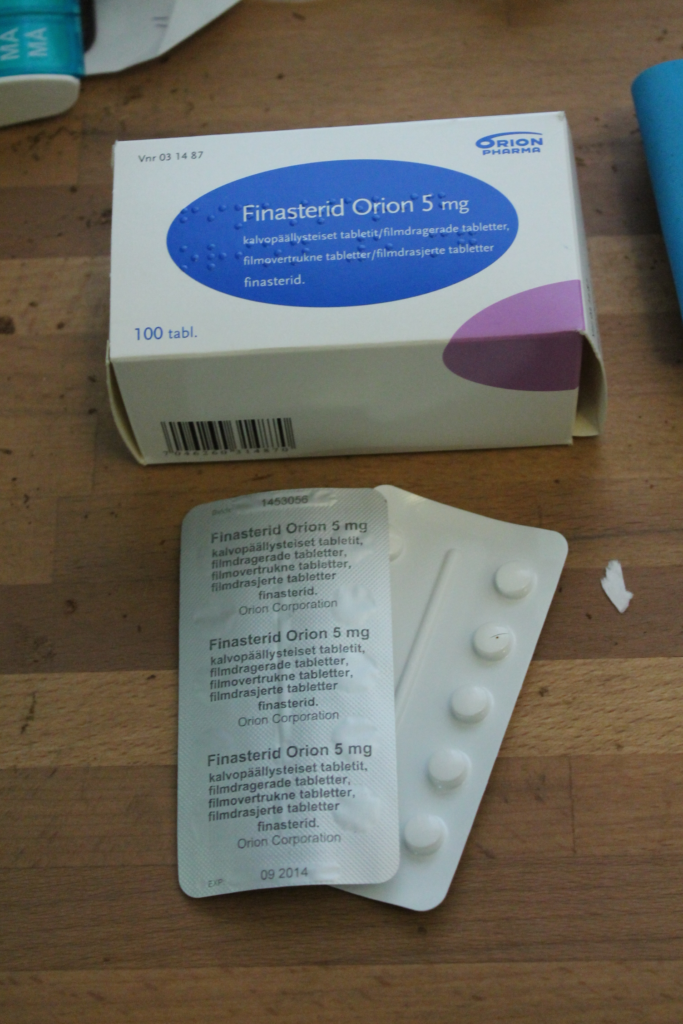
The Game Changer: Topical Finasteride
Here's what 99% of the doctors don't tell you: finasteride does not need to be taken orally.
There is a topical variant . . a solution that is applied directly to your scalp.
The advantage? Topical finasteride has a fraction of systemic absorption compared to oral finasteride. This means: all benefits to your hair, with a significantly lower risk of systemic side effects.
Research shows that topical finasteride can produce similar results for hair growth, while the concentration in your bloodstream is up to 10x lower. That means less chance of:
- Sexual side effects
- Mental changes
- Hormonal fluctuations
One of my clients, Martijn (38), who stopped oral finasteride due to mild mood swings, switched to topical finasteride. His experience? "I keep my hair, but I feel like myself again."
Why isn't this common knowledge? Simple: there is less financial interest in promoting topical forms, and many general practitioners are simply unaware of this option.
Undesirable effects of Finasteride
Let's be honest about all possible side effects, from most to least common:
- Sexual dysfunction (1-5% of users)
- Libido decreased
- Erectile dysfunction
- Ejaculation problems
- Mental changes (1-2% of users)
- Subtle cognitive changes
- Voting changes
- In rare cases: depression or anxiety
- Physical changes (less than 1%)
- Gynaecomastia
- Fatigue
- Duizeligheid
- Allergic reactions (very rare)
What you don't hear in most articles: In the majority of men who experience side effects, they disappear within a few weeks of stopping finasteride.
The much discussed "Post-Finasteride Syndrome" . . . where side effects would be permanent . . . . . . is scientifically controversial and seems extremely rare if it already exists.
Who MUST Avoid Finasteride?
Finasteride isn't for everyone. You should avoid it if you:
- Have a history of clinical depression or anxiety disorders
- In the past poorly responded to hormonal treatments
- Pregnant or trying to become pregnant (finasteride can cause birth defects in male foetuses)
- Under 18 years old (your hormone is still under development)
A 7-Step Action Plan If You Consider Finasteride
If you have any doubts as to whether finasteride is for you, follow these steps:
- Ask for a hormone test before you start. Have your testosterone, DHT, oestradiol and thyroid function measured for baseline.
- Start at a lower dose You can start with 0.5mg instead of the standard 1mg to adjust your body.
- Consider topical finasteride as an alternative Discuss this option with your dermatologist, not your GP (dermatologists are better informed).
- Keep a symptom diary Write down your mood, energy, libido and cognition weekly for the first three months.
- Use a "buddy" system Ask a partner or friend to warn you about personality changes you may not notice yourself.
- Plan a 3-month evaluation Discuss your experiences with your doctor after 3 months of use.
- Combine with natural DHT blockers Supplements such as saw palmetto, pumpkin pit oil and green tea can enhance the effect without any additional side effects.
The Uneasy Truth about Hair Disappearance
Here's something we got to be honest about: Your hair is less important than you think.
I'm not saying this to discourage your finasteride use. I use it myself. But I have had an important realization:
We don't feel insecure because we're going bald. We think we're going bald because we feel insecure.
See the difference? Most men chase their hair because they think it will restore their confidence. But the reality is that external solutions rarely solve internal uncertainties.
So yes, use finasteride if you like. It works great for most men. But do it from a position of strength, not from despair.
What DOES REALLY WORK FOR Hair loss?
If you're serious about keeping and restoring your hair, here's my recommended protocol:
- Finasteride (oral or topical) Stops the cause of baldness at the source.
- Minoxidil 5% Stimulates blood supply and improves hair follicle health.
- Ketoconazole shampoo (2-3x per week) Reduces inflammation and has mild anti-DHT effects.
- Microneedling (1x per week) Stimulates growth factors and improves the uptake of topical treatments.
- Food supplements
- Vitamin D
- Biotin
- Zinc
- Collagen
This protocol not only stops hair loss, but can also lead to significant new hair growth in most men.
Conclusion: Is Finasteride The Risk True?
After years of research and working with hundreds of men with hair loss, I come to this conclusion:
Finasteride is a safe and effective drug for the vast majority of men.
Potential mental adverse reactions are rare and usually reversible. For those concerned, topical finasteride offers an excellent alternative with less systemic exposure.
In the end, the choice is yours. But that choice should be based on facts, not fear.
Do you have any experiences with finasteride, positive or negative? Share them below. Your honest story can help others to make an informed decision.
This article is for informative purposes and does not replace professional medical advice. Always consult a doctor before starting finasteride or other medication.
I've written several articles about Finasteride, are you interested in this? Then I suggest you look at one of the blogs below!
Finasteride or Dutasteride? Which one works better against hair loss?
What are the side effects of Finasteride and how to prevent it?
What are the side effects of Finasteride and how to prevent it?
What exactly happens when you stop taking finasteride?
Does Finasteride stop hair loss over the longer term?
What should you do if you prefer no Finasteride wants to take and what are the best options?
Can Finasteride cause depression?
Why is it a good idea to combine Finasteride and Minoxidil treatments?
Why don't you have to be afraid to use finasteride against hair loss?
How can you treat gynecomastia (chest) formed by Finasteride?
Does Finasteride cause prostate cancer or the opposite?
Will Finasteride influence my results at the gym?
What is the optimal Finasteride dose for the treatment of hair loss?
Is Post Finasteride Syndrome real? What can you do about it?
How long can Finasteride keep her: is it permanent?
Can you still have children after using Finasteride?
How Long Does It Take Before Finasteride Starts Working?
What is the best Finasteride brand and is there any difference at all?
What's the best time to take Finasteride?
Does splitting finasteride tablets affect their effectiveness?
Does Finasteride lower testosterone levels?
Does Finasteride's hair growth affect the whole body?
How well does Topical Finasteride work against hair loss? Better than oral?
Can I Stop Oral Finasteride when Using Topic Finasteride? Read all about Topical Finasteride here!


You might like this too.

Hair growth Serums: The Ultimate Guide to Fighting Inhamms

Is the cause of your hair loss a fungal infection? Read more here!