Breezula: A brand new promising treatment for hair loss
Hair loss is a common problem affecting millions of people around the world and affecting their confidence and overall well-being.
Over the years, various treatments and solutions have been developed to prevent hair loss, ranging from medication to surgical procedures.
A new treatment that has attracted interest in recent years is Breezula.
In this blog post we will investigate what Breezula is, how it works, the potential benefits and current status in hair loss treatment.
What exactly is Breezula?
Breezula, also known as clascoterone, is a local medicine that is promising in the treatment of alopecia androgenics, also known as baldness according to the male or female pattern.
It is classified as an androgen receptor inhibitor, which means that it blocks the effects of androgens, especially dihydrotestosterone (DHT), a hormone involved in the miniaturization of hair follicles.
How does Breezula work?
Breezula reduces the amount DHT in the scalp, preventing the harmful effects on hair follicles.
DHT is known to be the growth phase of haarzakjes short, which over time leads to ever thinner and shorter hair strands.
By inhibiting the androgen receptors, Breezula helps the anagene (growth) phase which promotes thicker and healthier hair growth.

What does Scientific Research and clinical studies say about the effectiveness of Breezula against hair loss?
Breezula has undergone several clinical studies to evaluate safety and efficacy in the management of hair loss.
One remarkable study, published in the Journal of the American Academy of Dermatology, involved a randomised, double-blind, placebo-controlled study of male subjects suffering from alopecia androgenic agents.
Results showed that Breezula showed a significant increase in the total number of hairs and hair thickness compared to the placebo group, suggesting that Breezula may be an effective treatment against hair loss.
Another study, published in the Journal of Drugs in Dermatology, investigated the use of Breezula in female subjects with alopecia androgenetics.
The results showed a significant improvement in hair density and subjective hair growth assessments after use of Breezula over a certain period of time.
The ongoing study and clinical studies around Breezula indicate that it is a promising option for people seeking non-invasive and local hair loss treatment.
What are the Benefits of Breezula against hair loss?
1. Local application: Breezula is applied directly to the scalp, making it an easy and non-invasive option for people who hair loss to deal with it.
2. Targeted approach: By focusing specifically on androgen receptors in the scalp and inhibiting them, Breezula focuses on the main cause hair loss associated with alopecia androgenic agents, which can lead to long-term benefits.
3. Minimum side effects: Clinical studies have shown that Breezula is well tolerated with minimal side effects, making it a beneficial choice for people seeking safe and effective treatment against hair loss.
Some people may experience mild skin irritation or dryness at the application site. However, it is important to know that the reactions may vary per person and it is advisable to consult a doctor or dermatologist for personal advice.
4. Potential for combination therapy: Breezula can be used in combination with other anti-hair loss treatments such as minoxidil or finasteride, to maximize the results and provide a comprehensive approach to hair recovery.
What is the Current status and availability of Breezula?
At the time of writing this blog, Breezula undergoes further clinical studies and regulatory processes for approval by relevant health authorities.
Although not yet commercially available for widespread use, progress in clinical studies suggests a promising future for this treatment option.
Duration of treatment
The optimal treatment duration for Breezula is still determined by ongoing research.
Different treatment periods ranging from a few weeks to a few months have been studied in clinical trials.
Further studies are needed to determine the most effective and sustainable treatment schedule.
Can Breezula be used in combination with other treatments such as minoxidil or finasteride?
Breezula may be used in combination with other hair loss treatments such as minoxidil or finasteride, to improve the results.
Combining treatments with different mechanisms of action can have a synergistic effect, thereby promoting hair growth and minimising hair loss more effectively.

Can Breezula also be used by women?
Although Breezula has shown positive results in both men and women during clinical studies, it is important to know that hair loss patterns and underlying causes may differ between genders.
Further studies are needed to evaluate efficacy and safety specifically in female hair loss.
What are the long-term effects for Breezula?
Although the clinical studies have so far shown promising results, the long-term effects of Breezula are still being investigated.
Further research and follow-up studies are needed to assess the long-term sustainability and lasting benefits of treatment.
When will Breezula Availability and Legal be approved?
Breezula is not yet available for commercial use, as it has yet to be approved in several countries.
The timeline for approval may vary between regions and regulatory authorities.
It is advisable to stay informed of the relevant healthcare authorities and contact healthcare professionals for the latest availability information.
It is important to note that Breezula is promising as a possible treatment for hair loss, but that the results may vary per person and that it may not be suitable or effective for everyone.
Consultation with a healthcare professional or dermatologist is crucial to determine the most appropriate treatment approach based on individual needs, medical history and specific hair loss patterns.
Can Breezula recover her?
Breezula, also known as clascoterone, is a topical anti-androgenic medications that have been shown to be promising in clinical trials for the treatment of androgenic alopecia (hair loss).
Clinical studies suggest that Breezula may contribute to hair growth due to the effects of dihydrotestosterone (DHT), a hormone associated with hair loss, inhibiting.
Although individual reactions may vary, some users have reported positive results in terms of hair growth and thickness.
When does Breezula Phase 3 begin?
The start of Phase 3 studies for Breezula depends on the progress of the medicine through previous phases and regulatory approval.
It is recommended to consult the latest updates of the pharmaceutical company or regulatory authorities for the latest information.
What are the side effects of Breezula?
As with any medicine, Breezula may have possible side effects. Common adverse reactions reported in clinical trials are application site skin irritation.
It is essential to consult a health professional before using Breezula to understand potential risks and benefits.
Is Breezula Available in the Netherlands?
The availability of Breezula in the Netherlands depends on the approval status of regulatory authorities.
If Breezula is approved, it can be obtained by prescription.
Persons interested in obtaining Breezula should consult health professionals or local authorities for the most up-to-date information on their availability in the Netherlands.
Conclusion
Breezula is promising as a potential breakthrough in the treatment of hair loss, especially alopecia androgenics.
Thanks to the ability to tackle the underlying cause of hair loss and the encouraging results in clinical studies, Breezula offers hope for people looking for effective and non-invasive solutions to their hair loss.
However, it is important to consult a healthcare professional or dermatologist to discuss the best treatment options based on individual circumstances.
In the meantime, a healthy lifestyle and good hair care can help to keep the hair healthy and minimize further hair loss.
Prevent hair loss and maintain healthy hair: While waiting for Breezula or considering other treatments against hair loss, it is essential to adopt healthy habits to promote healthy hair.
Some tips are:
1. A nutritional diet: Make sure your diet contains a variety of vitamins, minerals and proteins that are essential for healthy hair growth such as iron, zinc, biotin and vitamin E.
2. Soft hair care: Avoid excessive heat styling, aggressive chemicals and tight hairstyles that can damage the hair and scalp.
3. Stress management: Chronic stress can contribute to hair loss. Take stress reducing activities such as exercise, meditation or hobby dressing into your daily routine.
4. Regular scalp care: Keep your scalp clean and hydrated and consider using mild shampoos and conditioners suitable for your hair type.


You might like this too.
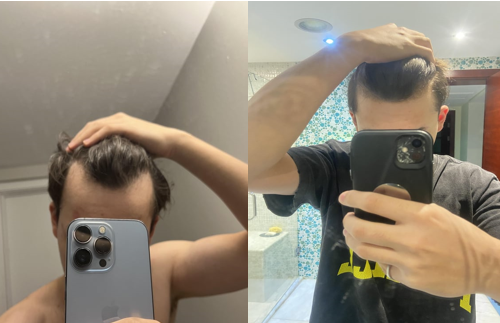
7 Months with Finasteride and Minoxidil, what progress!

Nanoxidil vs Minoxidil for hair loss: Which one's the best?