

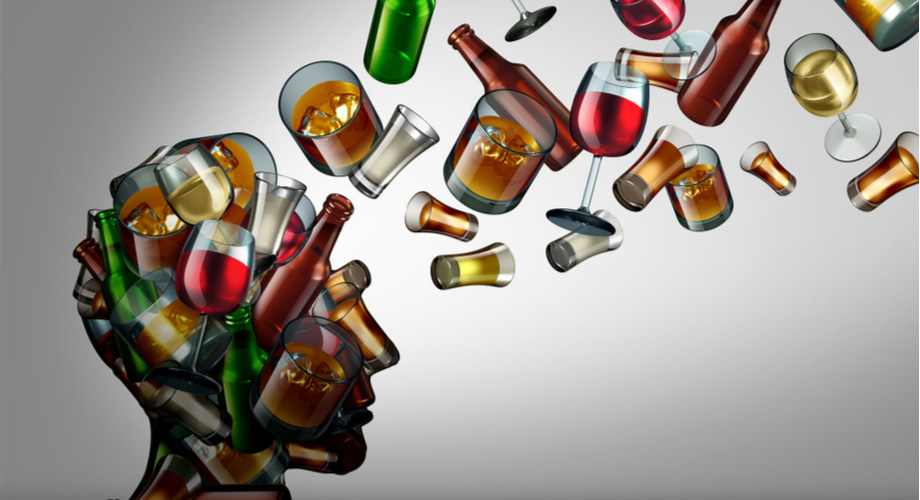
Does alcohol consumption cause hair loss?
Raise the glass, but beware of the consequences! Alcohol may be a great social lubricant, it can also lead to a not so great side effect: hair loss. That's right, your favorite drink could be the reason for your thinning locks.
Although more studies are needed to establish a causal link between alcohol and hair loss, several studies have shown a link between heavy alcohol consumption and an increased risk of hair loss. It is therefore advisable to limit alcohol consumption.
These studies also indicated that alcohol can cause hair loss in various ways, such as by affecting hormones, blood vessels, vitamin and mineral levels and hair shaft. It may also exacerbate existing hair loss conditions.
But don't worry, you don't have to swear off alcohol completely. Just watch your usage and keep reading for more information on how alcohol can cause hair loss and what you can do to prevent it.
What is the theory behind alcohol as a cause of hair loss?
The theory behind alcohol as a cause for hair loss is that it can affect several factors necessary for healthy hair growth. These factors include hormones, blood vessels, vitamins and minerals, and the hair shaft.
Alcohol consumption is believed to lead to an imbalance in the levels of hormones in the body, such as oestrogen and testosterone, which can cause hair loss. The alcohol can also narrow the blood vessels in the scalp, so the hair follicles do not get the necessary oxygen and nutrients to grow.

In addition, alcohol consumption can lead to a shortage of important vitamins and minerals, such as vitamin B, zinc and biotin, which are necessary for healthy hair growth.
Furthermore, alcohol is thought to cause oxidative stress and inflammation in the scalp, leading to hair damage and hair loss. Alcohol can also cause imbalance in the levels of antioxidants and free radicals in the scalp, leading to damage to the hair follicles and hair loss.
Alcohol may also worsen existing hair loss, such as alopecia androgenic agents (AGA) or alopecia areata. In these cases alcohol consumption can make the hair fall out faster, making the hair more thin or becomes bald.
Finally, alcohol can cause damage to the hair shaft, breaking the hair and thinning. But has this been proven?
What does science say about alcohol in relation to hair loss?
Various studies and studies have been conducted on alcohol and hair loss, which generally support the idea that excessive alcohol consumption can lead to hair loss.
One study found that heavy alcohol consumption can lead to hair loss in women. The study showed that women who consumed more than 30 grams of alcohol per day (about two drinks) were more likely to lose hair than women who consumed less.
One such study, published in the Journal of the American Academy of Dermatology, found that heavy alcohol consumption is associated with an increased risk of alopecia androgenics (AGA) in men.
The study analysed data from over 21,000 men and found that those who consumed more than five drinks per week were more likely to develop AGA than those who consumed less.
Another study, published in the International Journal of Dermatology, showed that heavy alcohol consumption can lead to telicious effluvium. This is a form of hair loss characterized by the fact that the hair falls into a dormant phase and falls out. The study showed that heavy alcohol consumption can cause an imbalance in hormones and nutrients required for healthy hair growth, leading to hair loss.

A similar study, published in the Journal of Cosmetic Dermatology, shows that excessive alcohol consumption can lead to hair loss by affecting the hair follicles in such a way that they fall into a dormant phase and no new hair grow. This can lead to thinning hair or even baldness.
More studies...
The following study published in the Journal of Dermatology showed that heavy alcohol consumption can lead to hair loss by causing inflammation in the scalp. The study showed that excessive alcohol consumption could lead to an increase in the production of certain inflammatory mediators. Which could damage the hair follicles and lead to hair loss.
Another study, published in the Journal of Clinical and Aesthetic Dermatology, showed that heavy alcohol consumption can lead to hair loss by causing oxidative stress in the scalp. The study showed that excessive alcohol consumption can cause imbalance in the levels of antioxidants and free radicals in the scalp, leading to damage to hair follicles and hair loss.
A study published in the International Journal of Trichology found that heavy alcohol consumption can lead to hair loss by affecting the levels of certain vitamins and minerals in the body. The study showed that heavy alcohol consumption can lead to a shortage of important nutrients such as zinc, Iron and vitamin B complex, all required for healthy hair growth.
These studies further support the idea that excessive alcohol consumption can contribute to hair loss by influencing various factors such as inflammation, oxidative stress, vitamin and mineral levels and hormones.
Conclusion
Alcohol can cause hair loss in various ways, for example by affecting hormones, blood vessels, vitamin and mineral levels and hair shaft. It may also exacerbate existing hair loss.

Although more research is needed to establish a causal link between alcohol and hair loss, several studies have shown a link between heavy alcohol consumption and an increased risk of hair loss. It is therefore advisable to limit alcohol consumption.
To prevent alcohol-related hair loss, it is important to reduce alcohol consumption and to follow a healthy diet rich in vitamins and minerals. You should also consider Supplements to supplement vitamins and minerals that may be missing from your diet. It is also important to use soft hair care products such as shampoos and conditionersTo keep your hair and scalp healthy.
It is important to note that the studies are observatile and that more research is needed to establish a causal link, but it is advisable to limit alcohol consumption, follow a healthy diet and take the necessary measures. Supplements take to supplement vitamins and minerals that may be missing from your diet to help maintain healthy hair growth.


You might like this too.
Biotin & Hair loss: Truth or Marketing Hype? 🔍

MINOXIDIL EXPRESSED GUIDE: _ 🔍


