


What are less common causes of hair loss?
For many people, having her is part of your identity. If we lose her, we lose something we cherish to ourselves. That's why it's important that you identify your cause of her loss in time if your hair is your sweetheart. In addition, it can help to find the right treatment in stopping hair loss.
Less common causes of hair loss, where conventional treatments such as Finasteride or Minoxidl have little effect include: Hair loss caused by anabolics or steroid use, telogen effluvium and drug use or anticancer treatments such as radiation and chemotherapy. Fortunately, most forms described in this article are temporary hair loss.
Most articles on hairlossstoppen.nl are about one specific type of hair loss. Namely Alopecia androgenics and that is for good reason natural. Because androgenic alopecia, also known as male baldness, is by far the most common cause of hair loss. However, there are several causes of hair loss that are less common. In this article I will go further into less common forms of hair loss.
Why don't Minoxidil or Finasteride work against hair loss for some people?
As described above male baldness is far away the most common version of hair loss. Once you think you're suffering from this, it's important to get a diagnosis from medical professionals. So the treating doctor can get a prescription for proven hair loss treatments such as finasteride and minoxidil.
The most bleang rich in fighting male baldness is time. The sooner you deal with it, the better! The more time people waste trying theoretical unproven treatments, the greater the risk of losing more hair to the point where it becomes virtually impossible to get their hair back. Unless they invest in an expensive hair transplant.
However for some people, about 5%, treatments work as Finasteride or Minoxidil Not.
This is because they probably have another cause of their hair loss. These causes are explained below.
Steroids or anabolics
Anabolic use is a known cause of hair loss. In fact, this cause is related to male baldness. The reason that conventional hair loss treatments such as minoxidil and Finasteride have less effect is because more testosterone is converted to DHT. Testosterone levels are so high that blocking part of the conversion to DHT is not enough to stop hair loss.
In the original studies of Finasteride and minoxidil as hair loss treatment, only participants who did not take anabolics were tested. Only with persons with realistic and natural hormone levels. The treatments are not designed to treat hair loss in people who quadruple their testosterone levels.

The effect of this type of hair loss is still the same. So taking finasteride can help. But it comes down to trying to put out a fire with a water dropper. It just won't be powerful enough to have a remarkable effect on your hair loss. In addition, you can bet money that if you already suffer from male baldness, anabolics will only worsen this.
Chemo Therapy
This is an obvious cause, namely chemotherapy. Chemo therapy causes very sudden and very rapid hair loss. This is because this treatment primarily affects rapidly growing cells. This includes the dermal papilla cells of the hair follicles that promote hair growth. So almost all forms of chemotherapy will cause hair loss. Besides, it's not just about the scalp, it's about the whole body. In most cases, fortunately, it's temporary.
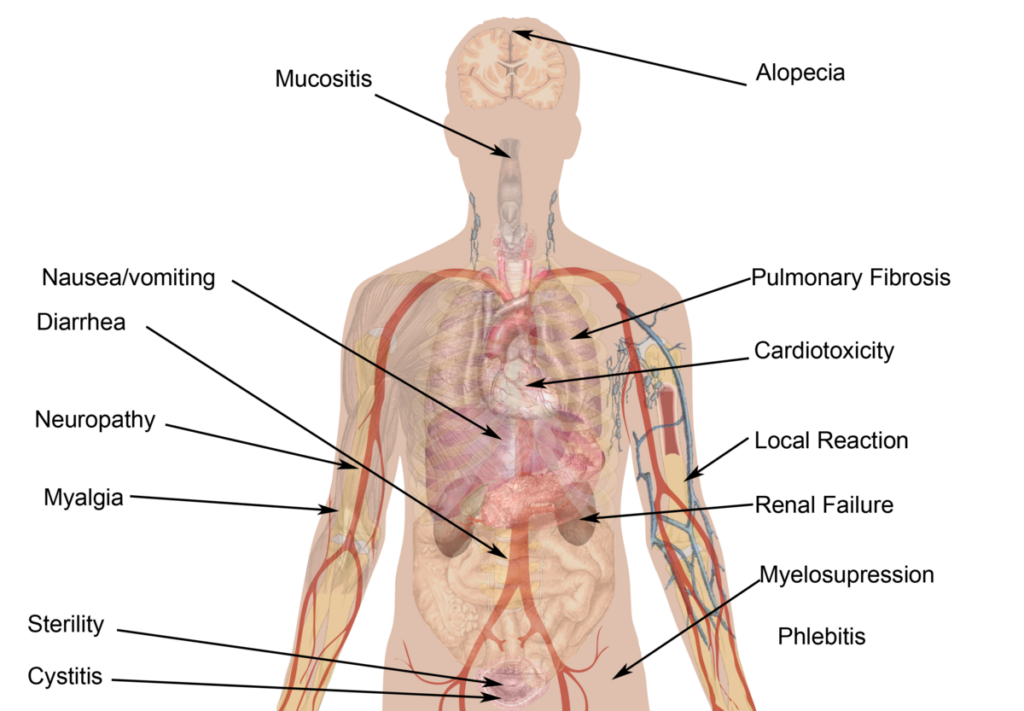
Adverse reactions Chemotherapy
However, there is a chemotherapy drug known to cause permanent hair loss in some cases. This product is called Paxil and is used to treat breast cancer. In most cases, hair grows back within 3 to 4 months after stopping Chemo.
Radiation
Another related cancer treatment that can cause hair loss is local radiation. Fortunately, these treatments are also not permanent, but temporary. However, in the case of radiation of the head for example brain tumors, it can unfortunately be permanent in many cases.

Of course hair loss is nothing if you compare it to this life-threatening disease and so in these causes only secondary, it is much more important that these treatments affect cancer rather than maintaining your hair.
Telogenic effluvium
Science supports the idea that emotional stress can be associated with at least one form of hair loss: telogenic effluvium. In another article I also described that stress is also a possible cause of early gray . Read here More!

Telogenic effluvium is characterised by the abrupt onset of hair loss. People with talogen effluvium may notice a thinner ponytail, or a sudden increase in hair in the shower, pillowcase or house.
It is considered normal to fall out about 100-200 hairs a day. The exact number varies depending on the individual or hair care. Although it is not uncommon that up to 50% of the head hair falls out during a telogenic effluvium event. This causes this condition, reassuring, not complete baldness
But there's a catch. The hair loss usually starts about three months after the stress. As soon as the hair follicles enter the tealous phase prematurely, it takes about three months to complete the cycle and the hair falls out. Stress is one of the causes of telogen effluvium; also medicines, severe diseases and childbirths can cause a period of hair loss.
The pattern of hair loss in telogenic effluvium is unclear. Spot-shaped hair loss or broadening of the hairline usually indicates other diagnoses, such as alopecia areata or hair loss in women. I have dealt with this condition in this article.
Conclusion
Although the odds are small that you are someone who has one of these hair loss forms, I hope this article was informative. For the few who suffer from this hair loss, the traditional treatments for hair loss are probably a waste of money. Fortunately, most forms are described in this article temporary hair loss.
However, most of you will suffer from male baldness. I have written this site several blog posts on how to fight this best. Make sure to take a look if this is something you're worried about.




4 reactions
Pingback:
Pingback:
Pingback:
Pingback: