

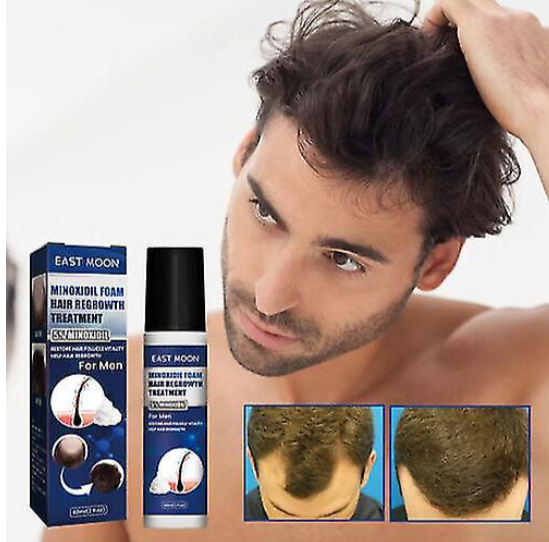
How often a day should you use Minoxidil?
Three years ago I stood in front of the mirror and realized that my crown looked like a helipad. Not that it happened all of a sudden... But that morning, with the light of the bathroom just wrong, I couldn't get around it. My hair was disappearing.
Like most men panicked, I first Googled "stop hair loss" and was flooded with ads for miracle pills, expensive transplants and shampoos that promised more than they could deliver. But one name kept coming back: Minoxidil. After weeks of doubt, because let's be honest, no one wants to admit they're going bald.
That decision changed not only my hair, but also my understanding of what hair loss actually means and how you handle it smartly. Because spoiler alert: Minoxidil is not a miracle cure, but it is the best we have. And if you do it right, it can change your life.
Why I tell you this (and why it matters)
Before we dive into the details, I want to be honest about why I'm writing this guide. Not because I'm a doctor, I'm not. Not because I got a miracle hair either. But it is because over the past three years I have literally spent hundreds of hours studying every study, every forum post, and every anecdote about Minoxidil.
🕒 MINOXIDIL TIMELIN TRACKER
Follow your hair growth journey and know exactly what to expect
I used myself as a guinea pig. I made all the mistakes you can make. And yes, I have achieved results I never dreamed of three years ago. But more importantly, I've learned that success with Minoxidil revolves around much more than just buying a bottle and putting it on your head.
It's all about understanding. For realistic expectations. For consistency. And to admit the courage to admit that hair loss is more than cosmetic, it touches the core of how we see ourselves.
The Reality Check That No One Tells You
Let me start with the harsh truth that no ad will tell you: Minoxidil is not a cure. It's symptom control. You quit, you'll be back to square one in six months. For a lot of people, this feels like a threat, but to me, it was liberating.
Why? Because it meant I was in control. Every day I could choose to keep my hair or not? That choice gave me power over something I had felt powerless about for years.

When I started, I had expectations that were totally unrealistic. I thought I'd have the hair of my 20th in a few months. Spoiler: That did not happen. What did happen was more subtle but ultimately much more valuable. My hair got fatter. Fuller. The bald spot on my crown was covered again. And more importantly, I stopped thinking about my hair all the time.
The Story Behind The Pil: From Heart Patient to Hair Growth Hero
The origin of Minoxidil as a hair growth agent is actually hilarious. Imagine: you're a heart patient, you get a new blood pressure medication, and suddenly your hair starts growing in places it's been gone for years. The first patients probably thought they were going crazy.
In the 1970s, cardiologists were flooded by men asking if they could have this "hairy side effect." It took over a decade for pharmaceuticals to realize they had gold in their hands. In 1986, the topical version was finally approved, and the rest is history.
But here it gets interesting: The mechanism of action is still not fully understood. We know it dilates the blood vessels around hair follicles. We know it prolongs her growth phase. But why exactly, and how it does that at cellular level . . . there are still gaps in our knowledge.
For me, this made it more fascinating. Here was a means that worked proven, used by millions of people, but that still contained mysteries. It felt like using magic that you know works, even though you don't quite understand how.
My First Months: A roller coaster Van Hoop and Disappointment
The first time I bought Minoxidil, I spent ten minutes in the pharmacy staring at the different options. 2% or 5%? Liquid or foam? The staff started looking at me suspiciously, like I was planning to rob the place instead of just buying my confidence back.
I finally chose 5% foam .. a decision I'm still happy with. The first application was an anti-climax. You expect something dramatic, but it's just... foam on your head. Like using soap without water.
The first month nothing happened. Well, not where anything happened, but it was the opposite of what I was hoping. My hair loss seemed to get worse. I suddenly counted every hair that went off in the shower, every hair on my pillow. It was obsessive and unhealthy, but inevitable.
Fortunately, I had prepared myself by doing research. This is called the "shed" a period in which old, thin hair falls to make way for new, thicker hair. Rationally, I knew this. Emotionally, I felt like I was getting accelerated bald.
Month two was the low point. I was seriously considering stopping. My crown looked worse than before I started. My friend tried to reassure me, but I saw the concern in her eyes. Did I make a mistake? Was I one of those people Minoxidil doesn't work for?
The Breakthrough: Month Three to Six
Sometime in the middle of month three, I noticed something subtle. Not that there was any more hair that would take months. But the texture of my hair felt different. Thicker. As if each individual hair had gained more confidence.
This was the moment I understood Minoxidil wasn't working as I expected. It doesn't suddenly grow new hair in bald spots. Instead, the existing hair makes stronger, thicker, and brings the thin hair back to life that you had actually given up.
Month four brought the first visible changes. Photos of that time clearly show the diffuse dilution on my crown began to fill up. Not spectacular, but unmistakable. For the first time in years I went back to the hairdresser relaxed.
By month six, I had developed a new routine that went beyond Minoxidil alone. I had learned about nutrition, supplements, scalp care, and especially about patience. Because that's what hair growth is all about, not quick results, but consistent progress.
The Real Science: Why It Works (And Why Sometimes Not)
After months of results, I really wanted to understand what happened in my scalp. Minoxidil is essentially a vasodilator. It makes the small blood vessels around your hair follicles grow larger, bringing more nutrients and oxygen to your hair roots.
But here it gets interesting: Not everyone has the same enzyme (sulphotransferase) that is needed to convert Minoxidil into its active form. About 10-15% of people lack this enzyme, or lack it. Minoxidil simply doesn't work for them, no matter how loyal they use it.

This explained why some people in forums swore to Minoxidil while others claimed it was complete nonsense. It also explained why I had doubted for so long, the stories were so contradictory because people react biologically differently.
Genetics also plays a major role. Some people have follicles that are extremely sensitive to DHT (the hormone that causes male baldness). For them, Minoxidil is a patch on a wooden leg that helps, but does not solve the underlying cause.
The Frequency Puzzle: Why I went over On Once Per Day
The official instructions say twice a day, and I've followed that for years. Every morning and every night, without exception. Until I started to wonder, is this really necessary?
The half-life of Minoxidil in your scalp is approximately 18-22 hours. This means that after a day half of the active substance is still present. Theoretically, therefore, once a day should be sufficient to maintain stable levels.
I decided to do an experiment. For three months I only used Minoxidil at night. Not because I was lazy, but because I wanted to know if the official instructions might have been exaggerated.
The result? My hair kept looking the same. No backup, no improvement. This gave me the freedom to choose when to use it, instead of having my day dictated by a bottle of foam.
For people who have difficulty with consistency, this is a game-changer. Better to use loyalty once a day than sporadically twice a day. Consistency always gains from intensity in hair growth.
Concentrations: My Dangerous Flirt With Higher Doses
After a year of stable results with 5% Minoxidil, I started to wonder: What would happen if I used more? Online I found stories of people who used 7%, 10%, or even 15% concentrations with spectacular results.
⚡ MINOXIDIL IMPACTITY MAXIMIZER
The Ultimate Guide to Double Your Results
🎯 Efficacy factors: From 30% to 85% Good luck
Optimum Protocol
Consistency + correct application + microneedling
85% Effectiveness
Default Usage
Minoxidil only, regular use
60% Effectiveness
Inconsistent Use
Forgotten doses, no routine
35% Effectiveness
🔄 Realistic For vs After Expectations
❌ FOR (Norwood 3)
Visible hair loss on crown and sleep
• 40-60% hair loss
• Thin, weak hair
• Low hair density
✅ NA (12 months)
Significant thicker, fuller hair cover
• 15-25% hair loss
• Thicker, stronger hair
• Increased density
🚀 Result Multiplers: What Competition Don't Tell
Timing
+25% for evening use
Temperature
+20% for body heat
Skin pH
+30% at pH 6.0-6.5
Microneedling
+40% with 1.5mm roller
Supplements
+15% with Zinc/Izer
Sleep
+20% at 7+ hours
🔍 Mythbusters: Facts vs Fiction
❌ MYTHE
Use more = better results
2ml a day is no better than 1ml. The excess product just dries up.
✅ TRUTH
"Consistence beats intensity"
Once a day loyalty is better than twice a day sporadically.
❌ MYTHE
"Results are visible after 6 weeks"
Real results are only noticeable after 3-4 months.
✅ TRUTH
"Shedding means it works"
Increased hair loss at week 2-8 is a good sign.
💰 Realistic Cost Analysis: Investment vs ROI
Actual Cost Minoxidil Treatment
💡 Minoxidil = 80% cheaper than a 5 year transplant
🎯 The 5 Golden Rules for Maximum Success
Start Early
Start with first signs. Maintenance is easier than recovery.
Be consistent
Every day, same time. No exceptions, no excuses.
Combine Strategic
Microneedling + supplements = 40% better results.
Patience & Documentation
Photos every 3 months. Results come after month 4-6.
Lifelong Commitment
Stop = lose everything within 6 months. Long-term plan.
So I ordered 10% Minoxidil from an online pharmacy. The first week felt awesome, the tingling sensation was stronger, which was psychologically satisfying. But by week two, my scalp started to itch. Week three brought red spots. Week four I stopped abruptly when I got palpitations after applying.
This experience taught me that more is not always better. 5% Minoxidil is not only the standard because it is easy to produce it is the sweet spot between effectiveness and safety. For most people it is also the optimum.
That said, I know people who successfully use 7% without side effects. The key is slowly build up and stop at the first signs of irritation. But to be honest, If 5% does not work, the problem is probably not due to the concentration.
Liquid vs Foam: A Personal Preference With Consequences
In my Minoxidil journey I extensively tested both formulations. Liquid was my first choice, it seemed logical that a liquid would penetrate better than foam. The reality was less rosy.
Liquid Minoxidil made my hair sticky and oily. Not subtle greasy, but "I've got a week-not-washed" greasy. It was especially bad if I used it in the morning for work. Colleagues started asking if I was feeling well.
Foam, however, dries much faster and leaves no residue. It feels lighter and is easier to spread over your scalp. For me this was a no-brainer, but I know people who swear by liquid because they think it penetrates better through thick hair.
There is also a practical aspect: Foam is much easier to dose. With liquid it is easy to use too much (which does not help and is expensive) or too little (which reduces effectiveness). With foam, you just use half a cap .
The Microneedling Experiment That Changed Everything
Eight months after starting Minoxidil, I had stable, but not spectacular results. My hair was thicker and fuller, but I still had a visible dilution on my crown. Then I read about microneedling.
The concept sounds medieval: You stick little holes in your scalp with a roller full of needles. But science is fascinating. Micro-injuries stimulate growth factors and can improve the absorption of Minoxidil by up to 300%.
My first microneedling session was... uncomfortable. Not painful, but strange. I felt like I was torturing myself for my vanity. But after 24 hours, the recommended waiting time before you can use Minoxidil again, my scalp felt different. Sensitive, but also like something had woken up.
After three months of microneedling combined with Minoxidil I saw changes I had not seen in the eight months before. Little hairs began to appear in areas I had already given up. My crown began to fill up noticeably.
Now, two years later, I do microneedling every Sunday. It's become part of my routine, like brushing teeth. And although I can't prove it's the microneedling that makes the difference, I'm not going to stop.
The Lifestyle Factors Nobody Wants to Hear
Here comes the part where I'm gonna sound like your mother, but it has to be said: Your lifestyle has a huge impact on how well Minoxidil works. I learned this the hard way during a stressful period at work.
Three months of 70-hour working weeks, poor nutrition, and not enough sleep did more damage to my hair than I could have imagined. Despite using Minoxidil's loyalty, my hair started falling out again. Not dramatic, but enough to make me realize that Minoxidil is not a miracle cure that forgives all sins.
Sleep Turns out to be crucial. Growth hormone is mainly produced during deep sleep, and without sufficient growth hormone even the best Minoxidil cannot work optimally. Since I've improved my sleep hygiene, dark room, cool temperature, no screens for bedtime, my results have visibly improved.
Stress is the silent killer of hair growth. Chronic high cortisol levels interfere directly with the hair cycle. Meditation, exercise, and learning to say "no" to unnecessary stress have helped my hair more than any supplement has ever done.
Food plays an underrated role. Your hair is literally what you eat. Protein deficiency, iron deficiency, or a shortage of essential fatty acids can completely eliminate the effectiveness of Minoxidil. I'm not a nutritionist, but I do know that my hair became visibly better when I stopped living on pizza and energy drinks.
Supplements: What Works, What Doesn't, And What Expensive Is
In my search for optimal results I probably spent hundreds of euros on supplements. Some of them worked, most of them didn't, and a few of them were total waste of money.
Biotin is probably the most hyped hair supplement. Reality? Unless you have a biotin deficiency (which is rare), it doesn't do much. My nails got stronger, but my hair didn't get any thicker.
Zinc On the other hand, it made a difference. Many men have a slight zinc deficiency without knowing it, and zinc is crucial to its protein synthesis. 15mg a day was the optimum for me.
Iron was the game-changer I didn't count on. A blood test showed that my ferritin (iron storage) was low. After three months iron supplementation the improvement in my hair was unmistakable. This highlights the importance of testing before supplementing.
Saw Palmetto is often sold as "natural finasteride," but my experience was disappointing. For six months no noticeable difference, despite the promises of online reviews.
The Psychological Side Nobody Discussing
Let's be honest about something no one likes to admit: Hair loss does more to you than just changing your appearance. It affects your identity, your confidence, your sense of control over your own body.
The first months of Minoxidil use were mentally exhausting. Not because of the product itself, but because of the constant focus on my hair. I became obsessive. Photos taken under different lighting conditions. Counting hairs in the shower. Mirror checks every few hours.
This obsession was counterproductive. Stress causes hair loss, and I made myself stressed by constantly checking if the treatment worked. It was a vicious circle I had to break through.
The solution was simpler than I expected: acceptance. Not from baldness, but from the trial. Hair growth is slow. Results are subtle. And sometimes it goes two steps forward, one step backwards.
When I stopped checking daily and instead made monthly photos, not only did my stress get less than my results got better. The mind-body connection to hair growth is real, and underestimated.
Troubleshooting: When It Doesn't Work As Expected
After three years in the Minoxidil community, I've come across countless stories of people for whom it doesn't work. But often, when you dig deeper, there are clear reasons why they don't see the results they expect.
Problem 1: Unrealistic expectations. Many people expect bald spots to grow back completely. Minoxidil is fantastic for thickening existing hair and slowing down further hair loss, but it is not a hair transplant in a bottle.
Problem 2: Inconsistant use. I know someone who claimed Minoxidil wasn't working, but who used it mostly at night and often forgot weekends. Hair growth requires consistency .
Problem 3: Ignore underlying issues. Minoxidil treats the symptoms, not the cause. If your hair loss is caused by thyroid problems, anaemia, or extreme stress, Minoxidil alone will not be enough.
Problem 4: Stop too early. I see people stop after 8-10 weeks because they see "no results." Hair growth cycles last 3-6 months. You cannot expect a process that lasts months to become visible within weeks.
Combination therapies: When Minoxidil alone is not enough
For some people Minoxidil is a complete solution. For others, it's just the beginning. After a year and a half of good but not spectacular results, I decided to explore other options.
Finasteride was the most obvious candidate. This drug blocks the production of DHT, the hormone that causes male baldness. But after weeks of research, I decided not to try because of potential side effects.
RU58841 is an experimental topical anti-androgen. No official approval, no long-term studies, but promising anecdotal stories. After months of doubt, I ordered it from a research chemical company.
The combination of Minoxidil and RU58841 gave me the best results I've ever had. My crown filled up further than I had hoped. But after six months, I stopped because of uncertainty about long-term security.
Topical finasteride became my next experiment. Lower systemic absorption than oral finasteride, but still DHT inhibition where you need it. After a year of use, I can say it was a valuable addition to my regiments.
Economic Reality: What it really costs
Let's talk about money, because nobody likes money, but it's important. Minoxidil is not free, and if you use it for life, the amount gets pretty high.
Generic 5% Minoxidil costs about €15-20 a month. That's €180-240 a year. In ten years, that'll be... €1800-2400. That sounds like a lot of money, and it is. But compared to a hair transplant (€3000-8000) or other cosmetic interventions, it is relatively affordable.
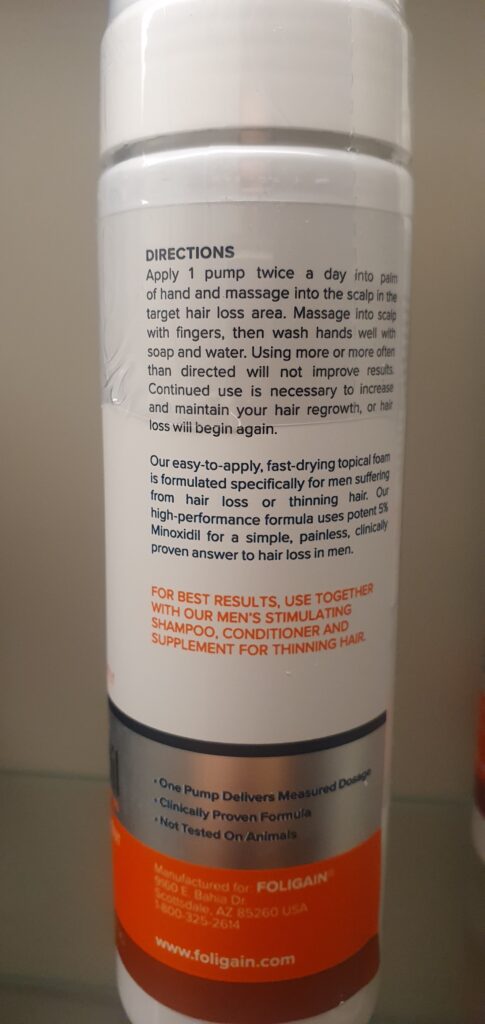
I've tried several brands over time: Rogaine, Kirkland, Folligain, generic versions. Honestly, I didn't notice any difference in effectiveness. The active ingredient is the same, so why pay more for fancy packaging?
Important though: always buy from reliable sources. Online "deals" may be tempting, but decaying or fake Minoxidil is not worth your money and potentially dangerous.
The Future: What's coming?
The world of hair loss treatment is not standing still. There are developments that may change the game, and some are closer to commercial availability than you might think.
Liposomal formulations Promise better penetration with fewer side effects. The first products are already available, although still expensive.
Nanoxidil is marketed as an improved version of Minoxidil with a smaller molecular size. The studies are limited, but the initial results are promising.
Stem cell therapies sounds like science fiction, but are closer to reality than ever. Companies like Replicel and Follica are working on treatments that can regenerate hair follicles.
JAK inhibitors such as baricitinib show promising results for different types of hair loss. Although experimental, they may be the future of hair loss treatment.
Practical Tips Making The Difference
After three years of trial and error, I have developed a number of practical tips that can make the difference between mid-cre and excellent results:
Timing applicable: I'm applying Minoxidil right before bedtime. This gives the maximum time for absorption and avoids styling problems during the day.
Skin massage: Five minutes massage to apply Minoxidil improves blood circulation and may increase effectiveness.
Skin hygiene: A clean scalp absorbs Minoxidil better. But wasn't too often .. ..this can play away the natural oils that protect your scalp.
Temperature control: Too hot water in the shower can worsen hair loss. Lame water is better for your hair and scalp.
UV protection: The sun can damage your scalp and hair. A cap or SPF spray can help, especially if you have a thinner hairline.
The Adverse Reactions What Nobody Talks About
Most of the side effects of Minoxidil are mild and temporary, but there are a few things that have surprised me during my use:
The shedding phase takes longer than making ads believe. It took me almost three months to stop the increased hair loss. This was mentally exhausting.
Skin dryness was unexpected. Especially in winter my scalp became dry and itchy. A mild conditioner or scalp oil helped enormously.
Change in her texture. My hair not only got thicker, but also slightly crazier. Not dramatic, but enough to adjust my styling routine.
Unwanted body hair growth is real. Especially on my forehead and cheeks grew more hair than before. Not dramatic, but noticeable enough that I need to trim more often.
Women And Minoxidil: Another Experience
Although this guide is mainly based on my male experience, I have learned a lot through forums and communities about how women experience Minoxidil. The differences are more significant than I expected.
Women usually have diffuse hair loss instead of typical male pattern baldness. This means that Minoxidil often gives women more visible and faster results, as the mechanism of action better suits their type of hair loss.
However, the risk of unwanted facial hair growth is much higher in women and much more visible. Therefore, it is often recommended to start with 2% concentration instead of going directly to 5%.
Hormonal fluctuations in menstrual periods, pregnancy, menopause . Many women notice that their results vary depending on their hormonal cycle.
My Current Routine: Three Years Later
After three years of experimenting, my routine has stabilised until something works and can be sustained:
Daily: 5% Minoxidil foam, once a day (evening), combined with 0.1% topical finasteride.
Weekly: Microneedling with 1.5mm dermaroller (sunday), followed by 24 hours Minoxidil break.
Monthly: Head exfoliation with soft scrub to prevent product buildup.
Quarterly: Progress photos under standardized lighting conditions. It's not more likely to become obsessive.
Annual: Blood tests to check iron, vitamin D, and thyroid function.
This may sound a lot, but in practice it takes about 10 minutes a week. For the results that I have achieved, that is more than worthwhile.
The Mental Shift: From Baldness Fighting To Optimize Hair
The biggest change in my relationship with Minoxidil came when I stopped thinking in terms of "to combat baldness" and began to think in terms of "optimize her." This seems like a subtle difference, but it changed everything.
Instead of focusing on what I lost, I started focusing on what I could improve. Instead of constantly fearing further decline, I became interested in how to maximize my results.
This mindset shift made the use of Minoxidil from a daily reminder of my "problem" to a daily investment in myself. It became a form of self-care instead of a necessity.
Why I would recommend it (and to whom not)
After three years I would recommend Minoxidil to:
- Anyone with early signs of pattern hair loss (Norwood 1-4)
- People willing to commit for months or years
- Those who have realistic expectations about what is possible
- People who understand that it is part of a holistic approach
I would NOT recommend it to:
- People who expect miraculous results within weeks
- Those who cannot be consistent with daily use
- People with extensive baldness (Norwood 6-7) as the only treatment
- Anyone who cannot bear the financial commitment
The Uneasy Truth About Expectations
Here's something nobody wants to hear but what's true: Minoxidil probably won't give you back your 20s hair. It probably won't give you a model hair. What it can do is give you the best hair that allows your current genetics and age.
To me, accepting this meant never having the thick, full hair of my childhood. But it also meant realizing that I could look significantly better than when I would do nothing.
That acceptance was liberating. It stopped the constant comparison with my younger self and let me focus on progress instead of perfection.
The Community: Why Support Is Important
One of the most valuable aspects of my Minoxidil journey was finding online communities of people who are going through the same thing. Forums, Reddit communities, Discord servers There are countless places where you can share and learn experiences from others.
These communities taught me about new developments, helped me to develop realistic expectations, and provided moral support during difficult times. She reminded me I wasn't alone in this experience.
But beware of toxicity. Some communities are dominated by negativity and obsession. Find groups that are constructive and focused on solutions, do not complain.
Concluding Thoughts: Three Years Later
Would I do it again? Absolutely. Minoxidil changed my life? Yeah, but not the way I expected.
It didn't give me perfect hair back. It didn't suddenly make me irresistible attractive. What it did was to give me back a sense of control over something I had felt powerless about.
My hair is now thicker than it has been in years. My crown is no longer visible under normal light. I don't think about my hair all the time when I talk to people. That mental freedom is perhaps the greatest gift Minoxidil has given me.
Is it perfect? No. Is it worth it? Absolutely. Will it be the same for you? That depends on your expectations, your commitment, and a little genetic lottery.
But if you're considering starting, I can tell you this: The biggest mistake you can make is to do nothing while you're in doubt. Hair loss is progressive. Every day you wait is a day where you may lose her that you could have kept.
Start conservative, be patient, keep realistic expectations, and give it at least six months before you evaluate. And remember: It's not a race, it's a marathon. Good luck with Minoxidil is measured in years, not weeks.
Your hair deserves that investment. And more importantly, You deserve to feel good about what you look like. Minoxidil may be part of that, but it's your choice how to deal with hair loss.
Whatever you decide, do it consciously and informed. You deserve no less than that.


7 reactions
Pingback:
Pingback:
Pingback:
Pingback:
Pingback:
Pingback:
Pingback: