


7 Months with Finasteride and Minoxidil, what progress!
At the start of a hair recovery trip at the age of 21, it can be both empowering and transformative. This article describes the remarkable progress of 7 months of an individual who devotedly integrated finasteride and minoxidil into their daily routine.
With a specific focus on the use of foam minoxidil twice a day, this person's journey also raises questions about remaining sleep irregularities, the possible need for microneedling and curiosity to their current Norwood classification.
Treatment regimen
The individual closely followed a daily regimen using consistently finasteride in combination with the use of foam minoxidil twice daily.

Although compliance with the minoxidil scheme was not perfect, devotion to finasteride remained unwavering.

This combination is known to address hair loss by reducing the hormone dihydrotestosterone (DHT) with finasteride and promoting hair growth with minoxidil.
Hair at Sleep and Microneedling
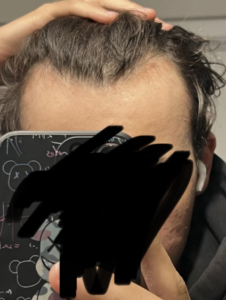
Despite progress, the individual notices persistent irregularities with baby hair at sleep. This raises the question of whether microneedling could be a possible solution.
Microneedling is a technique in which a dermaroller or dermapen with small needles creates micro-damages on the scalp, stimulates collagen and possibly contributes to hair growth. However, it is essential to approach microneedling with caution and preferably under the guidance of a dermatologist.
Styling to Hide
The individual emphasizes the ability to style their hair effectively and to hide the irregularities at bedtime.

This highlights the transforming power of not only treatments but also the creative use of hairstyles to improve appearance during the recovery process.
Norwood Classification
Determining the Norwood classification, a scale widely used to assess male pattern baldness, is crucial to understand the degree of hair loss and to monitor progress. Without visual documentation, it is difficult to determine exactly the initial Norwood stage.

Looks like the person went from a Norwood 3 to Norwood 2 in about 7 months.
Nevertheless, the progress of the individual in seven months could possibly be compared to the Norwood scale to assess the effectiveness of the treatments.

Conclusion
The hair transformation journey of this individual stands as a testimony to the patience and devotion needed to tackle hair loss.
Progress with finasteride and minoxidil is clear, but the questions about her at sleep and Norwood classification point to the complexity of everyone's unique experience with hair recovery.
As this journey continues, it will be fascinating to observe further developments and possible solutions to the remaining challenges.


You might like this too.

Diabetes causes your hair loss: What's the connection?

What do women find more attractive when it comes to her? Bald or big hairdos?


