


Nanoxidil vs Minoxidil for hair loss: Which one's the best?
Let's face it, hair loss sucks. Period. I know, you know, and you're probably here because you're looking for answers like me. After months of research, spending way too much money on different products, and frankly some frustrations, I think I can finally give an honest picture of what's actually going on with Nanoxidil and Minoxidil.
This video explains it well!
Everyone throws words like "scientifically proven" and "revolutionary breakthrough," but what does that really mean to you and me? Let's talk about the real differences without all that marketing bullshit.
This is, in my opinion, the best Nanoxidil
This is the minoxidil I'm currently using myself!
Are you wondering how I my hair Grow back?
Scroll to the bottom of the blog for my personal hair loss routine? . There are all the products I use for the best results against hair loss.
Moreover, these are the only means that are scientifically proven to work.
How Everything Started: My Personal Hair loss Journey
Before I go into the specific products, I want to take you into my own story. Because let's face it, if you're here, you're probably in the same situation I was in a few years ago.
🧬 HER GROWTH TREATMENT ADVISOR
Discover in 60 seconds which treatment suits you perfectly
I was 28 when I first noticed. Not that dramatic moment from movies where you suddenly go bald, but much more subtle. At first I thought it was just the lighting in my bathroom, or maybe I was combing my hair differently. But after a few months, I couldn't deny it. My hairline pulled out and my hair got thinner.
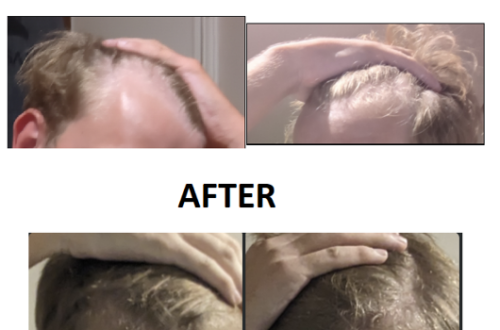
The funny thing is how that affects your confidence. Suddenly you're constantly working on your hair, checking every mirror, wondering if other people see it. I even started making photos of my head from different angles to monitor if it got worse. Obsessive? Absolutely. But I think every man who goes through this is doing the same thing.
After months of denial, I finally decided to take action. And that brought me to the big question: what really works?

Minoxidil: The Old Rot in the Box
Minoxidil has actually been sort of a coincidence. Imagine: you take a medicine for your blood pressure and suddenly you get more hair. Must have been a bizarre surprise for those first patients in the '70s. "Doc, my blood pressure is fine, but look at my hairline!"
I've been experimenting with Minoxidil myself for years, and I got to say it works. But not without a hit. Those first weeks were terrible. My scalp itched as if I had lice, there were white flecks in my hair (sexy, isn't it?), and I constantly felt that there was a layer of fat on my head.
🧬 MINOXIDIL vs NANOXIDIL
The Complete Choice Guide for Hair Growth Treatments
- You have a tight budget (student)
- You have no sensitive skin
- Your discipline for a routine
- Your homework/flexible workplace
- Your first hair growth treatment
- Decades of proven results
- Cheap and wide available
- FDA approved
- Many clinical trials
- Common skin irritation and itching
- Sticky, fat feeling
- Yellow spots on pillowcase
- Less compliance due to adverse reactions
- Your skin is sensitive
- You got a busy lifestyle
- Your representative work does
- You had trouble with Minoxidil
- Comfort is more important than cost
- Much less side effects
- Better penetration (smaller molecules)
- No propylene glycol
- Discrete application possible
- Significantly more expensive
- Less long track record
- More limited availability
- Less scientific studies
Proven & Affordable
Comfort & Quality
My First Months with Minoxidil
Let me take you through that first period, because I think a lot of people aren't prepared for what's coming.
Week 1-2: Pure hell. I used the 5% version because I thought "more = better" (spoiler alert: not always true). My scalp got so dry I looked like I had severe dandruff. My girlfriend asked me to wash. Embarrassing.
Week 3-6: It got a little better, but then came the shedding phase. More hair loss than ever. I panicked and Google like I bought the wrong product. Apparently this is normal, but no one had warned me it would be so extreme.
Week 7-12: Slowly the irritation began to ease. I had learned to wash my hair thoroughly before going to bed, otherwise my pillowcase became a yellowish, sticky mess.
Month 4-6: This is where it got interesting. I actually saw new hairs growing. Little blond things first, but they got darker and thicker. My hairdresser even noticed.
But here's the thing: After about four months, I saw a real difference. Not that I suddenly looked like a LattoOréal model, but those bald spots at my sleep started filling again. The problem was that I had to deal with it every day. That irritation never went away completely.

The Science Behind Minoxidil (For Dummies)
The science behind Minoxidil is actually quite simple. It causes your blood vessels to widen, causing more blood to go into your hair follicles. More blood means more nutrients, and more nutrients hopefully mean more hair. That makes sense, doesn't it?
But more is happening. Minoxidil also extends the "anagenic phase" . That is the growth phase of your hair. Normally hairs grow 2-7 years, but with androgenic alopecia (the fancy name for male baldness) this phase is getting shorter. Minoxidil prolongs this period.
Plus, and this is what I thought was coolest, it could "wake up" hair bags that were in some kind of coma. Not all of the hair follicles that stop producing are really dead. Some are just inactive. Minoxidil can push them to get back to work.
Different Concentrations and Formulations
This is where it gets technical, but important. Minoxidil comes in different strengths:
2% solution: This was originally developed for women, but also works fine for men with mild hair loss or sensitive skin. Less side effects, but also less effect.
5% solution: The standard for men. More effective than 2%, but more likely to cause irritation.
5% foam/foam: Same as the solution, but less fat and easier to apply. Usually contains no propylene glycol, so less irritation.
10% solution: Some brands make this, but it's actually overkill. More side effects without proportional effect.
I tried them all. The foam was definitely the most pleasant in use, but also the most expensive. The 5% solution gave me the best results, but was a hell to live with.
Nanoxidil: The New Boy in the Class
Now this is where Nanoxidil is getting interesting. When I first heard about it, I thought: "Another miracle cure. Probably marketing bullshit again." But then I started reading about it and it actually made sense?
The idea is simple: make the molecules smaller so they can better penetrate your skin. No propylene glycol (that stuff that causes all that irritation), and a formula that leaves less mess on your head.
My Switch to Nanoxidil
I'm honest. I was skeptical. But after months of bullshit with Minoxidil, I thought, "Why not?" I had already spent so much money on hair-related products that another experiment wouldn't hurt.
The first thing I noticed was the package. Where Minoxidil often comes in cheap plastic bottles, Nanoxidil looked much more professional. Marketing? Maybe. But first impressions are important.
Week 1 with Nanoxidil: What a difference! No sticky shit, no itch that made me crazy. It just dried up and that was it. I could put it in the morning and just go to work without worrying that everyone would see that I had "something" on my head.
Month 1-2: No shedding phase! This was surprising. With Minoxidil I had had weeks of extra hair loss, but with Nanoxidil everything remained stable.
Month 3-4: This is where I started seeing results. Maybe even faster than with Minoxidil, but that can also be because I used it more consistently because it was so much easier.
Now, after almost a year of using Nanoxidil, I can say that I see similar results to Minoxidil, but without all those annoying side effects. Is it a miracle? No. Is it working? Is it more expensive? Unfortunately, yes.

The Technology Behind Nanoxidil
Nanoxidil is not just another name for Minoxidil. It's a really different molecule with a smarter approach.
Molecular size: Nanoxidil has smaller molecules than Minoxidil (209 dalton vs 326 dalton). Sounds nervous, but it means it's better to penetrate your skin and reach deeper into the hair follicles.
No propylene glycol: This is the stuff that causes irritation in many people in Minoxidil. Nanoxidil uses other solvents that are much softer.
Improved wording: Many Nanoxidil products also contain additional ingredients such as azelaic acid, adenosine, or procyanidin B2 which all have their own proven benefits for hair growth.
The Real Differences (Without the Marketing Nonsense)
Let me tell you what I really noticed in practice:
Ease of use
Minoxidil: Works, but you got to pay for it. Your hair often feels greasy, especially the first few hours after application. I always had to shower before I went somewhere where I had to look representative. Plus that itchy man, that itching. Sometimes it woke me up at night.
The routine was a hassle, too. Apply, wait until it was dry (sometimes 30 minutes), and still have that feeling that something is on your head. On windy days I could smell that other people also smoke that chemical smell.
Nanoxidil: Much more pleasant to use. I can put it in the morning and just get out the door. No fuss, no stress about whether people can see it or smell it. It moves quickly, has no smell, and leaves no residue.
Effectiveness
As regards results, they are similar. Both helped me stop my hair loss and get some new growth. Nanoxidil may have been working a little faster, but that could have been a placebo effect because I was less affected.
A difference I noticed: with Nanoxidil my existing hair seemed to get thicker and fuller, not just in number anymore. With Minoxidil I especially got new thin hairs that needed time to get fatter.
Adverse reactions Comparinone
Minoxidil side effects that I have before:
- Constant itching (especially first months)
- Dry scalp scalp
- Fat, sticky feeling
- Headache (rare but happened)
- Skin irritation around the hairline
- Yellow spots on my pillowcase
Nanoxidil side effects:
- Actually, nothing. Seriously. Maybe just a little dryness once in a while, but nothing compared to Minoxidil.
Money Talk (Unfortunately)
This is where it gets painful. Let's look at the real cost:
Minoxidil Cost
Generic versions: €15-25 per month Brand names (such as Rogaine): €30-45 per month Foam versions: €35-50 per maand
Seems reasonable, right? But then there will be additional costs:
- Special shampoo for irritation: €15 per month
- Conditioner because your hair gets dry: €10 per month
- Maybe some hydrocortisone cream for the worst itching: €8
- Extra washes for your pillowcase: €?
Nanoxidil Cost
Standard formulations: €50-65 per month Premium brands: €65-80 per month
Yeah, it's more than double Minoxidil's. But here's my reasoning: If I need extra products for the side effects with Minoxidil, and I use it less consistently because it's so annoying, I end up getting more expensive.
Plus, and this is important, with Minoxidil I had days when I just skipped it Because I didn't feel like it. Nanoxidil won't. I use it more consistently, and that ultimately is what matters.
Long Term Costs
Let's be honest about the long-term costs:
Per year:
- Minoxidil: €300-600 (depending on brand and additional products)
- Nanoxidil: €600-960
In five years:
- Minoxidil: €1.500-3.000
- Nanoxidil: €3,000-4,800
Sound like a lot of money? Sure. But compare it to other options:
- Hair transplantation: €3,000-8,000 (one time, but often need multiple sessions)
- Premium hair products and styling: €200+ per month
- Wigs or haircuts: €500-2,000 per year
In that context, topical treatments are actually quite reasonable.
Who's what for?
You're a good candidate for Minoxidil if:
Budget considerations: You have a tight budget and first want to try the cheapest option that works proven.
No sensitive skin: You generally have no problems with skin irritations or allergic reactions.
Discipline: You're willing to go through a difficult adjustment period and stay consistent, even if it's uncomfortable.
Mild hair loss: Your hair loss isn't very advanced yet, and you want to try something you're sure will work.
You're a good candidate for Nanoxidil if:
Skin sensitisation: You have a history of skin problems or are sensitive to chemicals.
Lifestyle convention: You want a treatment that fits easily into your daily routine without hassle.
Previously failed with Minoxidil: You tried Minoxidil but had to stop because of side effects.
Prepare to invest: You see hair growth treatment as a long-term investment and are willing to pay more for comfort.
Professional situation: Your work requires that you always look neat and you cannot take a risk with fat or irritated scalp.
Combinations and Extras
Something I learned: these products work better in combination with other things. After a lot of experimentation, I now use a complete routine:
My Current Stack
Morning:
- Nanoxidil 5%
- Biotin supplement (5mg)
- Vitamin D3 (if I'm short)
Evening:
- Nanoxidil 5%
- Once a week: dermaroller (0.5mm)
- Ketoconazole shampoo (2x/ week)
About Dermarolling
That dermaroller is a real game changer. It sounds scary (small needles on your head), but it helps to take the Nanoxidil better. Plus it stimulates blood circulation even more.
How I do it:
- Clean scalp (just washed)
- Roll horizontally, vertically, and diagonally across the problem areas
- Don't be aggressive. You want microtubs, no bleeding.
- Immediately thereafter apply Nanoxidil
- Infect the roller for next time
Why it works: The micro-wounds make your skin absorb the active ingredients better. Plus it stimulates the natural healing, which can help with hair growth.
Supplements that Really Help
I wasted a lot of money on "hair growth supplements," but a few are really valuable:
Biotin: Helps to structure your hair. Not magical, but useful.
Iron: Only if you're short. Have this tested by your GP.
Vitamin D: A lot of people are short, and it affects hair growth.
Zink: Again, only in case of a shortage.
What does NOT work: Those expensive "hair growth complexes" of €60+ per month. Usually just expensive variants of the above vitamins.
Common Errors (I also Made)
Error #1: Patience
The biggest mistake everyone makes? Give up too soon. I have friends who stopped after 6 weeks because they didn't see any results. Bro, your hair might grow 1cm a month. How do you expect a jungle in six weeks?
Realistic timeline:
- Month 1-2: Possible more failure (shedding)
- Month 3-4: Stabilisation
- Month 6-8: First real results
- Month 12+: Full Effects
Error #2: Inconsistent Application
"I forget sometimes" is the fastest way to failure. These products only work if you use them consistently. My tips:
- Set an alarm on your phone
- Connect it to an existing routine (tooth brushing)
- Put the product in a place where you see it
- Got backup bottles so you never run out
Error #3: Trying Too Much At the same time
I once started with Minoxidil, finasteride, dermarolling, ketoconazole shampoo, and five different supplements at once. If something went wrong, I had no idea what the causer was.
Better: Start with one product, use it for at least 3 months, then slowly add other things.
Error # 4: Wrong Application
I saw a guy at the gym who wet his Minoxidil. It's not working, people! The instructions are there for a reason:
- Dry scalp
- Clean skin (no product residue)
- Massage it well
- Let it completely withdraw before you use other products
The Psychological Side of Hair loss
Let's get serious. Hair loss isn't just a physical problem, it's mentally heavy. I've had months in which I was obsessed with my hair. Each mirror became an enemy, each photo a trauma.
The Mental Health Impact
Confidence: My self-confidence fell to a low. I went out less often, avoided photos, and wore hats all the time.
Relationships: It even affected my relationship. Not because my girlfriend said anything about it, but because I was constantly working on it.
Work: I noticed that I was less assertive in meetings, as if my hair loss also undermined my authority.
How I dealt with it
Acceptance: The first thing I had to learn was that this is normal. 50% of the men are involved. You're not alone.
Take action: Doing nothing made me crazy. By doing something, even though I wasn't sure of the result, I felt control again.
Perspective: I realized that people are much less concerned with my hair than I thought. Most people don't even notice.
Support: Talking to friends who went through the same thing really helps. Turn out, half my circle of friends was working on it.
Troubleshooting: Common Problems
"It doesn't work!"
If you see no results after 6 months:
Check your application: Are you doing okay? Consistent application to a clean, dry scalp?
Look at your lifestyle: Stress, poor nutrition, and lack of sleep can block hair growth.
Evaluate your expectations: Are you expecting too much? Photos of the same angle in the same light can help to assess objectively.
Consider an upgrade: Maybe it's time to switch from Minoxidil to Nanoxidil, or add other treatments.
"I Get Side Effects"
In Minoxidil:
- Try the foam version instead of the solution
- Lower the concentration from 5% to 2%
- Use less product
- Make sure your scalp is completely dry for application
In Nanoxidil:
- This is rare, but if it happens, stop and consult a doctor
"It's too expensive"
For Minoxidil:
- Buy generic versions
- Buy in bulk for discounts
- Compare prices online vs physical stores
For Nanoxidil:
- Look at starter packs or test packs
- Search for offers of new brands
- Consider it as an investment vs other solutions
Shopping: Where to Buy and What to Avoid
Reliable Sources
For Minoxidil:
- Local pharmacy (more expensive but reliable)
- Large online retailers (Amazon, bol.com)
- Specialized hair loss websites
- Directly at the manufacturer
For Nanoxidil:
- Official distributors (check the brand website)
- Specialized hair loss retailers
- Some pharmacies start feeding it
Red Flags at Online Shopping
Avoid:
- Prices too good to be true
- Websites without contact information
- Products without a clear ingredient list
- "Miraculous results in 2 weeks" claims
- Sites that only accept payments via cryptocurrency
Always check:
- Date of expiry
- Original packaging
- Ingredients List
- Reviews of other buyers
Alternatives and Future Perspectives
Other Proven Treatments
Finasteride: A pill that blocks DHT. Very effective, but can have side effects. Only on prescription.
Dutasteride: Stronger than finasteride, but also more side effects. Also only on prescription.
Laser therapy: LLLT (Low-Level Laser Therapy) caps are FDA-approved and can help. Expensive, but no side effects.
Hair transplantation: The ultimate solution, but invasive and expensive.
New Developments
Topical finasteride: Less systemic adverse reactions than oral versions.
JAK inhibitors: New class drugs that are promising.
Stamceltherapie: Still experimental, but promising.
Improved formulations: Liposomal delivery systems that penetrate even better than Nanoxidil.
My Personal Conclusion after 2+ Year
After everything I've tried and been through, I'd go for Nanoxidil right now. Not because it necessarily works better than Minoxidil . . the results are similar. But because it just makes my life easier.
I don't have to worry about itchy, flaky, or that fat feeling anymore. I can use it and just carry on my life. For me, that peace of mind is worth the extra money.
But I also understand if you want to start Minoxidil. It works, it's cheap, and if you don't have a problem with it, why pay more?
My Recommendations based on Situation
You're a student/krap budget: Start with generic Minoxidil 5%. If you got a problem with it, upgrade to Nanoxidil.
You have sensitive skin: Go straight to Nanoxidil. The extra costs are worth it.
You're 40+ and you got a good income: Nanoxidil. At this age, you just want something that works without fuss.
You just noticed hair loss: Try Minoxidil foam first. Less irritating than the solution but cheaper than Nanoxidil.
You've already tried everything: Maybe time for professional help. A dermatologist can suggest other options.
Long Term Perspective: What to Expect
Year 1
You're still in the experimental phase. You find out what works, what doesn't work, and how your body reacts. Expect ups and downs.
Year 2-3
Once you find a treatment that works, it becomes routine. You think less about it and it just becomes part of your daily life.
Year 5+
At this point, you've probably reached your plateau. More improvement is unlikely, but your current results remain stable as long as you remain consistent.
Exit Strategies
If you want to stop: Do it slowly. Do not stop abruptly, but slowly reduce the frequency. Expect your gain to be lost.
If you want to upgrade: Hair transplant becomes an option. Your topical treatment helps to maintain the result.
If it doesn't work anymore: Sometimes products can become less effective after years. Time to evaluate and maybe switch.
Last Thoughts: The Great Picture
The most important thing I learned in this whole journey is that hair loss is not the end of the world. Yeah, it's annoying. Yeah, it affects your confidence. But it doesn't define you.
Whether you opt for Minoxidil, Nanoxidil, or nothing at all, the most important thing is to make a choice that makes you feel good about it. Do your research, try what works for you, and accept that it's a process.
And one more thing. Talk to people around you. You'll be amazed how many men (and women) deal with them. It's not as taboo as you think, and you don't have to be alone.
Final Tips
- Start early: The sooner you start, the better the results
- Be consistent: Results come from persistence, not perfection
- Have realistic expectations: It's not a miracle cure.
- Invest in quality: Cheap is often expensive
- Monitor your progress: Photoshops help you to stay objective
- Find professional help as needed: There is no shame in asking for help.
Hair loss is frustrating, but you don't have to stand powerless against it. Whether you choose the proven, inexpensive route with Minoxidil, or the more modern, user-friendly option with Nanoxidil both can help you.
The point is to find something to live with and to use consistently. Because in the end, that's the secret: keep it, even if it's a little disappointing.
Good luck with that, and don't forget you're more than just your hair. Although I understand it doesn't always feel that way.
P.S: If you have specific questions about my experience or other products, please let me know. I like to share what I've learned, because I know how overwhelming all this can be at first.
I've written several articles about Minoxidil Are you interested in this? Then I suggest you click on one of the blogs below!
Which Minoxidil is better? Oral or Topical?
The best tips when using Minoxidil for maximum hair growth!
What happens if you stop Minoxidil?
Which Minoxidil brand is best for hair growth?
Which Minoxidil is better foam or lotion?
Which Minoxidil concentration is best for hair growth? (2%, 5%, 10%, 15%)
Is Minoxidil safe to use?
Nanoxidil vs Minoxidil for hair loss: Which one's the best?
Can women use minoxidil against hair loss?
Is minoxidil beard growth permanent or permanent?
Why is it a good idea to combine Finasteride and Minoxidil treatments?
Is Trioxidil better than Minoxidil against hair loss?
Still losing her while you're using Minoxidil? This is why!
Does Minoxidil also work against coves or only against a thinner crown?
How can you minimize Minoxdil shedding?
Does Minoxidil cause premature aging of the skin?
How long does it take to grow a beard through Minoxidil?
Is Oral Minoxidil even safe to use?
Minoxidil works for boys under 18?
Do you have to wait 24 hours after Dermarolling before you apply Minoxidil?
Minoxidil is dangerous to my cat?
Can Minoxidil Help with Thickening and Grow Back from Your Eyebrows?
My Routine
Curious about my personal routine against hair loss? An overview:
- Pumpkin seed oil: Twice a week for a natural boost. Try it. here.
- Dermapen: Essential for my scalp care and research has shown that it is the action of minoxidil double. 1x per week 20 min. Available here.
- Minoxidil: Only agent that can accelerate and double hair growth.
Daily support for hair growth. At least once every day. Find it here. - Finasteride: The only proven remedy that works against the main cause of hair loss is DHT. Supports in the fight against thinning hair. 0.5mg a day. More info on doctoronline.com.
- Haircatcher: Keep track of how much hair you lose. You use this to see if the bahndelingen have any effect. Take a look here.
- Pill Splitter: For easy intake and doubling your Finasteride supply. This allows you to split 1 to 5mg pills, to save money. Available here.
- Ketoconazole shampoo: For a healthy scalp. 3x a week at the shower. Try it. here.
Always consult your doctor before trying new products!




3 reactions
Pingback:
Pingback:
Pingback: