How Do You Grow Baby Hairs? A Complete Guide to Vellushaar vs. Terminal Hair!
"Why do I suddenly have so many irritating little hairs?" I have seen countless times come across in beauty forums and Facebook groups. And honestly? I couldn't figure it out at first.
If you're reading this, you're probably just like me ever was staring in the mirror at those mysterious little hairs around your hairline, wondering if this is normal, if it gets worse, and especially: What the hell you got to do with it. After years of research, trying out countless products (some of which failed disastrously), and conversations with dermatologists, her stylists, and other people who experience the same, I finally answered.
This guide goes beyond what you find elsewhere. We dive into the questions that keep you awake at night, the things that beauty magazines don't dare to discuss, and the practical solutions that really work. No bullshit, no unrealistic promises, just honest, useful information.
Why does my baby have hair on his forehead? (And why does Grandma care)
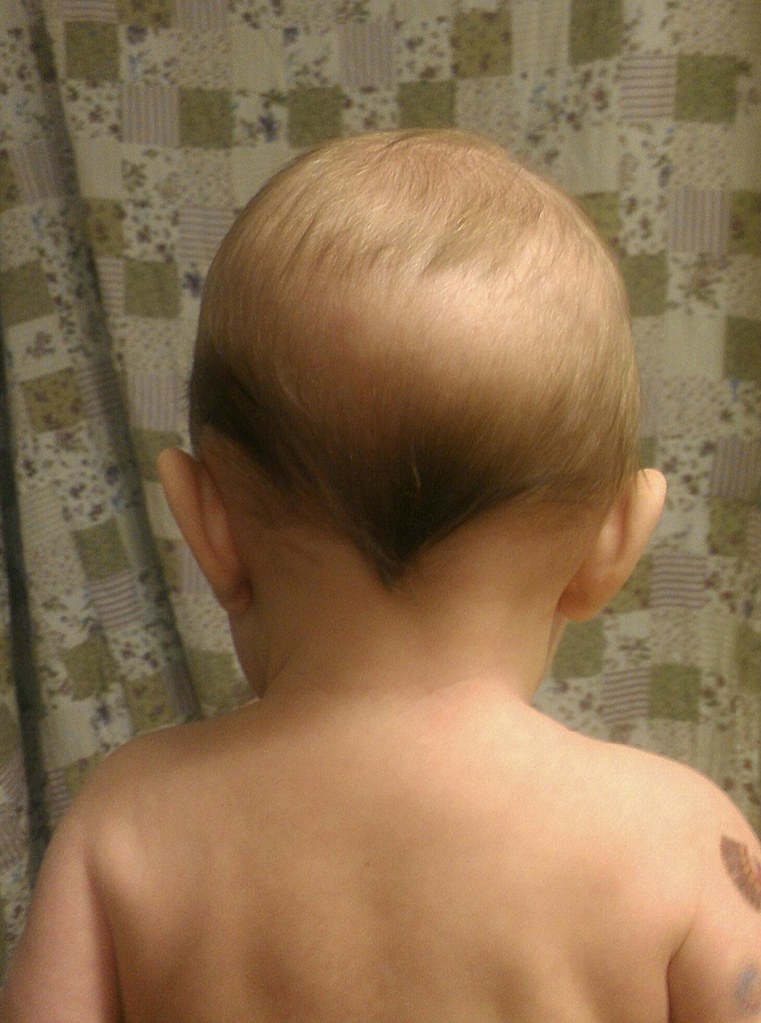
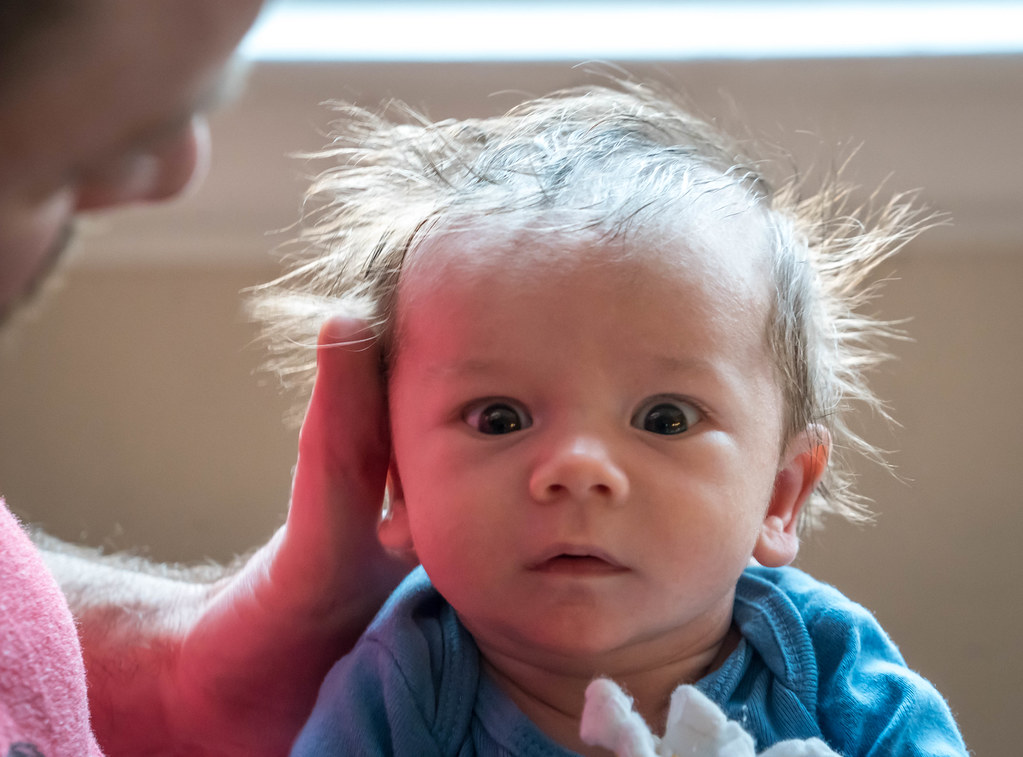
Let me start with something that every new parent experiences: Your baby is born with a decent bunch of hair on the forehead and suddenly everyone has an opinion. Grandma's worried about whether this is normal, your mother-in-law is suggesting weird remedies from her time, and you just sit there and google if your child is sometimes becoming a werewolf.
Relax. This is perfectly normal and even has a name: lanugo. This is actually very special when you think about it. Your baby has been swimming in amniotic water for months, and this soft down hair has acted as a natural dive suit. It protected the delicate baby skin from constantly bathing in amniotic water.
🌟 _
But here comes the interesting part that few people know: Not all babies lose this hair at the same time. Some babies are born bald (the lanugo already fell out in the womb), others look like little monkeys (and that's okay!). The forehead is often the last place where this hair disappears, because the hairs are thickest there.
I remember a mother in an online group who panicked because her 4 month old baby still had quite a bit of hair on her forehead. "Is this normal?" She asked. The answer: absolutely. Some babies keep this until their first birthday. And you know what's funny? These babies often have very nice, thick head hair.
The truth no one's telling you: If your baby has a lot of lanugo, this usually means that the hormones worked well during pregnancy. It is actually a positive sign of healthy development.
Why have I as an Adult Suddenly Baby Hair on My Forehead?
Okay, now it's getting personal. Maybe you recognize this: You're 25, 35, or 45 years old, and suddenly you notice something in the mirror. Those little hairs that were always there, they look... more? Striking? More irritating?
I went through a phase where I was obsessed with staring at my forehead. Was this always there? Did it grow? Did I go bald? (Spoiler alert: no, but that fear was real.) After a lot of research and conversations with professionals, I found out that there may be several reasons why you suddenly notice more baby hair.
The light factor no one calls: Different lighting can make your baby hairs look dramatically different. TL light in the office? Those hairs suddenly become super visible. Soft evening lights at home? You barely see them. I thought for months that my baby hairs were growing, until I realized that I just looked at myself more often under office lighting by working at home.
Seasonal changes: This is something I haven't seen anywhere else, but I have learned from my own experience and conversations with others. In winter, when the air is dryer, baby hairs stand more up and are more visible. In summer, with more humidity, they are often flatter. This explains why some people think their baby hair is growing seasonalally.
Hormonal roller coaster: This is where it gets interesting. Stress, sleep deprivation, hormonal contraception, pregnancy, breast-feeding, menopause Everything can affect your baby hair. I spoke to a woman who noticed her baby hairs getting fatter after stopping the pill. Another noticed the opposite after the menopause.
What does it mean to have a lot of baby hairs? (The Fair Version)
Let's face it. there is no objective measure of "many" baby hairs. What seems like a lot to you can be normal to someone else. But if you're worried, there are some things to consider.
🧬 BABYHAAR MYTHES
There are countless myths about baby hairs that lead to wrong care and unrealistic expectations. This scientifically substantiated guide reveals what is truly true.
📊 Baby hair Statistics
⚡ Quick Facts Check
The genetic lottery: Look at your parents, grandparents, brothers and sisters. Do they also have eye-catching baby hairs? Then chances are you inherited it, too. I didn't find out until I was 30 that my father always had baby hairs.He had just always gone away with Brylcreem (yes, really).
PCOS Polycystic ovarian syndrome is often not discussed in beauty contexts, but it can affect your baby hair. If you also suffer from irregular menstruation, weight gain around your waist, or acne, besides more baby hair, it is wise to discuss this with your GP. Not to scare you, but to reassure you or to get timely help.
Stress the invisible saboteur: Chronic stress can do weird things to your hair. I spoke to a woman who noticed during a severe divorce that her head hair became thinner and her baby hair became more prominent. Her body was resetting all the hair cycles. After the stress went away? Everything came back to normal.
Diet impact that nobody discusses: Extreme diets, veganism without proper planning, or just chronically eating too little can affect your hair growth. Your body will then stop using . . . . . . . .
Should I shave the baby hairs on my forehead? (And Other Drastic Measures)
Ah, the eternal question. I've heard so many stories from people who have tried this, some with success, others with disastrous consequences.
My own shaving experiment: I'm gonna be honest. I tried. On a Sunday night, with a Venus razor and far too much courage. The result? Three days later I had little stubble on my forehead that was visible under my foundation. Not my best moment.
Why shaving sometimes works: For people with very fine, light baby hair can gently shave with a special facial razor (think Tinkle rounds) best work. The key is frequency. You have to do this every few days, otherwise you'll get those nasty stubble.
The dermaplaning trend: This is actually professional shaving of your face, including baby hair. Many women swear to it because it exfoliates your skin. But beware: not all skin types are suitable for this, and it can be expensive if you let them do it professionally.
Threading the painful truth: Some people let their baby hairs thread away (epile with wire). This works, but it's painful and the hairs grow back thicker because you take them with root and all away. A woman told me she lasted three months before she gave up.
What no one tells you about shaving: Your facial skin is not your legs. Those stubble feels different, they can cause irritation, and if you wear makeup, the result can be bumpy. Think about it.
Baby hairs on the forehead Grow: Myths vs. Reality
Here it gets frustrating, because there are so many misunderstandings about what is and is not possible.
The hard truth: Vellus hair (baby hair) have a genetic limit. They don't get more than 1 centimeter, period. All those miracle products that promise to grow your baby hairs like head hair? Marketing nonsense.
What you can do: You can make them stronger, healthier, and a little thicker. I experimented months with different methods:
My daily routine: Every morning I massage my hairline for 2-3 minutes with my fingertips. Not to prolong the hairs, but to stimulate blood circulation. After six months, my baby hair looked a little fuller.
Ricinus oil experiment: I tried a drop of castor oil on my hairline every night for a month. Result? My baby hairs got slightly smoother and healthier looking, but no longer. Also important: Use really little, otherwise you get hidden pores.
Biotin supplements: After three months of taking biotin (10,000 mcg a day) all my hair became slightly stronger, including the baby hairs. But this also affected my nails and other body hair, so it wasn't a specific baby hair effect.
Minoxidil hindered the nuclear option: Some people try minoxidil on their baby hairs. This may work, but it is actually intended for real hair loss and can cause skin irritation in some people. A dermatologist told me this is overkill for normal baby hairs.
Baby Hair Stick: The Game Changer
After trying out countless products, I can honestly say that a good baby hair stick really makes a difference. But there are things you should know.
My product testing journey: I've tried at least 15 different sticks, gels, and waxing. Some made my hair sticky, others didn't work, and some gave me a rash. After a lot of trial and error, I found what works.
What really works in a baby hair stick:
- Beeswax as a base (not too much!)
- Light oils like jojoba
- No sulphates or parabens
- Matt finish (no shine)
Application tips that nobody tells you:
- Heat the product between your fingers BEFORE you apply it
- Use an old, clean mascara wall for precision
- Apply to light damp hair (not wet!)
- Always work in the direction where you want your hair
- Less is more you can always add more
Budget vs. expensive options: I have both €3 drugtore sticks as €25 high-end variants tried. Honestly? Some cheap options work just as well. It's about the ingredients, not the price.
Seasonal adjustments: In winter I need a stronger formula because the dry air makes my baby hair more rebellious. In summer I work with lighter products.
Baby hairs in Adults: The Psychological Impact
Let's talk about something no one's talking about. How baby hairs can affect your confidence.
The social media factor: Instagram and TikTok are full of people with perfect, smooth hairlines. This could make you paranoia over your own baby hairs. I went through a period of selfie editing to brush away my baby hairs. Not healthy.
Cultural differences: I noticed that different cultures deal very differently with baby hairs. In some Asian countries they are seen as a sign of youth and are emphasised. In Western countries, a lot of people want to hide them. This cultural difference is fascinating and shows how arbitrary beauty standards are.
The obsession cycle: I talked to people who spent hours a day working on their baby hairs. Mirror checking, constantly touching, buying products. If this sounds familiar to you, it's time to step back. Baby hairs are normal, everyone has them, and they don't determine your value.
Body dysmorphia link: For some people, baby hairs can be a trigger for body dysmorphia. If you find yourself obsessed with your baby hairs and this affects your daily life, consider talking to a professional.
Baby hair Flatten: Advanced Techniques
After years of experimenting, I developed a toolkit of techniques that really work.
The toothbrush method refined: Not every toothbrush works. You need one with soft bristles and a small cup. I'm using a child-antenna brush. Make it slightly moist (not wet!) and work the hairline outwards.
Spool brush hack: Buy a pack of disposable spooli brushes (the brushes for mascara). These are perfect for precision work and you can get rid of them after use, which is more hygienic.
Water + aloe vera gel: Mix a little pure aloe vera gel with water (ratio 1:3). This gives natural hold without stiffness. Perfect for people with sensitive skin.
Hair spray trick: Spray hairspray on a tissue, gently pat this on your baby hairs. This prevents overspray and gives more control.
Overnight training: For persistent baby hairs: comb them flat in the evening, apply a minimum amount of product, and sleep on a satin pillowcase. Repeat this for a week and your baby hairs "learn" to stay flat.
Weather adaptation: Rainy day? Extra product. Dry winter day? Less product but a leave-in conditioner. Summer humidity? Sometimes no product required.
Suddenly a lot of baby hair: Red Flags and When to Take Action
Not all changes in baby hair are innocent. Here are the signals to watch:
Timeline matters: Gradual changes over months are usually normal. Sudden changes within weeks may indicate something else.
Accompaniing symptoms: Baby hair changes + fatigue + weight changes + menstrual problems = time to check up.
Texture changes: If your baby hair suddenly gets coarse and dark (especially in women), this can be hormonal.
Asymmetry: Baby hairs that on one side of your head are different than on the other side can indicate local problems.
Bald patches: If you get bald spots where baby hair used to be, this might be alopecia areata.
I speak from experience: A friend of mine ignored the changes in her baby hair for months. When she finally went to the doctor, she turned out to have PCOS. Early detection could have saved her a lot of trouble.
The Difference Between Lanugo and Vellushaar: Why This Is Important
These two terms are often used interchangeably, but the difference is important, especially if you have problems.
Lanugo comeback: Sometimes adults get lanugo back, and this is always a red flag. This can happen in severe eating disorders, extreme weight loss, or certain medical conditions. As an adult you suddenly get very fine, colourless hair over your body, get help.
Vellus variations: Not all foul hair is the same. Some people have thicker foul hair that almost resembles terminal hair. Others have ultra-fine hair that is almost invisible. Both are normal.
Transformation triggers: Vellus hair can turn into terminal hair by:
- Puberty (normal)
- Hormonal medication
- Some disorders
- Pregnancy (sometimes permanent)
Reverse transformation: Terminal hair can also turn back into foul hair. This is done at:
- Male baldness
- Certain medicines
- Hormonal changes
- Aging
Grow Vellus hairs back? The nuanced reality
The answer to this question is more complicated than you think.
Shave Truth: Yeah, they grow back, but not always the same. I noticed that after repeatedly shaving my baby hairs got slightly coarser ends, purely mechanical by cutting off.
Plucking consequences: Epilation may damage the follicle over time. A woman told me that she epidated her baby hairs for years, and now some aren't growing back at all. Is that good or bad? Depends on what you want.
Laser limits: Traditional laser works poorly on light, fine hair. But newer technologies claim to be effective. A dermatologist told me that results are very variable.
Natural regulation variations: After removal, baby hairs do not always grow back uniform. Some come back thicker, some thinner, some not at all. This is unpredictable.
How does Vellushaar change to Terminal Haar? (And can you send this?)
This is where it gets really interesting, especially for people who want thicker hair.
Hormone hacking (safely): Some people try to "optimize" their hormones to transform foul hair. This is dangerous without medical supervision. I heard stories from people who tried risky supplements with serious side effects.
Minoxidil mechanics: If this works for baby hairs, why not for everyone? It appears that:
- Not all follicles react the same
- Genetics determines response
- Location on the head matters
- Patience is crucial (6+ months)
Natural stimulation: Things that can help (no guarantees):
- Massage for better penetration
- Good nutrition for follicle health
- Stress management
- Appropriate sleep
- No destructive hair practices
Realistic expectations: Most foul hair will never fully transform. It may get a little thicker and darker, but don't expect miracles.
DIY Remedies: What Works Real and What Doesn't Work
After years of experimenting, here's my honest experience with popular DIY solutions:
Coconut oil overrated: Everybody talks about this, but it's too heavy for baby hairs. It hides pores and makes your hair sticky. If you want to try, use minimal quantities.
Egg masks . . messy but effective: Protein masks can temporarily smooth your baby hairs through the proteins. But it's a hassle and the effect is temporary.
Rice water hamperedly good: This ancient Asian secret really works for the health of your hair, including baby hairs. Make rice water, ferment it, and use it as a leave-in treatment.
"Onion juice" Yeah, there are studies that show that onion juice is good for hair growth. But the smell is terrible and for baby hairs it's overkill.
Green tea rinse . . winner: Refrigerated green tea as hairwash can really help. The antioxidants are good for follicle health.
Petroleum jelly . . old school effective: Grandma's Vaseline trick still works for the flattening of baby hairs. But use very little and wash it well.
Seasonal Changes: Adjust to the Weather
Something I haven't seen anywhere else to discuss: How seasons affect your baby hairs.
Winter challenges: Dry air, static electricity, wool hats, everything works against you. My winter routine:
- Humidifier in the bedroom
- Anti-static spray (light)
- Satin hat lining
- Extra moisturizing products
Summer adjustments: Humidity can be your friend or enemy. High humidity often makes baby hairs curly and frizzy. My summer approach:
- Lighter products
- Anti-humidity sprays
- More frequent updating
- Waterproof formulas when you swim
Jump surprises: Pollen can irritate your scalp and make baby hair more visible. Plus, hormones can change with spring changes.
Fall transitions: Your hair adapts to changing humidity. This is often when people think their baby hairs are different.
The Male vs. Female Baby Hairs Differences
Men have different challenges with baby hairs than women, but this is rarely discussed.
Male pattern differences: Men often have more and graver foul hair due to higher androgen levels. This can be beneficial (less visible) but also detrimental (more difficult to style).
Grooming expectations: There's less social pressure on men to hide baby hairs, but some men do. Their options are more limited because many products are marketed to women.
Beard interaction: Men with beards should consider how their baby hair interacts with their facial hair. Some men deliberately grow their baby hairs to soften the transition between beard and head hair.
Female specific issues: Women have more hormonal fluctuations, which means more variation in baby hair. Women also often have more social pressure to have a "perfect" hairline.
Advanced Styling Techniques for Different Hair Types
Not all baby hairs are the same, and your approach needs to be adapted to this.
Fine, straight baby hairs: These are often flat but can become shiny from products. Use matte formulas and build in layers.
Coarse, curly baby hairs: These are the hardest to tame. They need more product and benefit from leave-in conditioners before using styling products.
Mixed texture: Some people have different textures of baby hairs in different places. This requires a zone-based approach.
Damaged baby hairs: Overstyling damaged baby hairs are more fragile and require a gentle approach with recovering ingredients.
The Psychology of Perfect Hairlines
Let's be honest about the mental health aspects of baby hair obsession.
Social media reality check: The perfect hairline on Instagram? Often edited, filtered, or the result of professional styling. Real people have baby hairs.
Perfectionism kick: Pursuing a perfect hairline can lead to an obsessive routine that takes more time and energy than it is worth.
Self-acceptance journey: I went through different phases: denial (what kind of baby hairs?), anger (why do I have this?), negotiation (maybe if I try this product...), depression (I never look good), and eventually acceptance.
Community support: Online communities can help, but can also become toxic. Find groups that promote body positivity, not perfectionism.
Troubleshooting: When Things Mistake
Sometimes baby hair styling goes wrong. Here are real-world solutions:
Product buildup: Too much product can make baby hairs heavy and sticky. Reset with a clarifying shampoo and start again with less product.
Allergic reactions: Red, itchy scalp after using new products? Stop immediately and use a mild, frame-free moisturizer.
Overprocessing: Too much shaving, epilation, or chemical treatments can damage your baby hair. Give them time to recover.
Color mistakes: Trying to paint your baby hairs can end badly. The hair is too fine to hold color well and can break.
Tools gone wrong: Wrong brushes or combs can break your baby hair. Invest in quality tools.
The Economy of Baby Hairs: Budget vs. Splurge
After years of spending on baby hair products, here is where your money is worth and where not:
Budget gems:
- Basic toothbrush for styling
- Drugstore aloe vera gel
- Generic hair spray
- Simple hair oil
Worth the splurge:
- High-quality styling stick
- Professional spooli brushes
- Silk pillowcases
- Good declarying shampoo
Total waste or money:
- "Miracle" growth serums
- Expensive gadgets
- Celebrity approved products
- Most natural remedies
DIY vs. professional: For most people DIY is completely sufficient. Professional styling is fun for special occasions, but not necessary for daily use.
Conclusion: Your Baby Hairs Journey
After thousands of words about baby hairs, what's the bottom line? They're normal, they're complex, and they deserve respect, not obsession.
Whether you're a parent wondering about your baby hairs, a teenager struggling with self-image, or an adult finally trying to understand what's happening to your hairs, remember this: There's no perfection, and that's okay.
Your baby hairs are part of you. They tell a story of genetics, hormones, life experiences, and time. You can style them, hide them, emphasize them, or just ignore them.
The important thing is to make informed decisions based on accurate information, not marketing or social pressure. Try things out, see what works for you, and be especially nice to yourself in the process.
And remember: Everyone has baby hairs. Even that person with the "perfect" hairline on social media. We're all human, and people have her all kinds of hair, including the small, fine species that sometimes seems to live their own lives.


You might like this too.

Is Minoxidil safe to use?
What happens to hair follicles in baldness and how to prevent this?