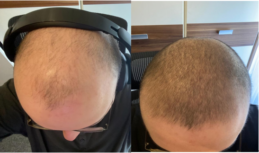
Is tadalafil an alternative to hair loss?
Hair loss is one of those problems that affect almost everyone sooner or later. Whether you're male or female, young or old, chances are you ever looked in the mirror and wondered where all those hairs went. While most people think directly of expensive hair transplants or aggressive topical treatments, a surprising candidate increasingly appears in conversations between hair stylists, dermatologists and yes, even on obscure internet forums: tadalafil.

You probably know tadalafil better under brand names such as Cialis . . the medicine that helps men with erectile dysfunction. But what if I told you that this same drug might be the key to getting your hair back? It sounds too good to be true, and frankly I've been skeptical too. But after months of research, conversations with dermatologists and studying the available scientific literature, I have to admit: There's more to this story than you'd think.
The Unexpected Discovery: How An Erectile Pill Wakes Hair Bags Shakes
The story actually begins by chance, like many breakthroughs in medicine. Patients taking tadalafil for erectile dysfunction began to report that their hair became thicker, that bald spots were less noticeable. At first this was dismissed as a coincidence or wishful thinking. Researchers decided to take a serious look at it.
Tadalafil belongs to a class of medicines called PDE5 inhibitors. In ordinary human language this means that it blocks certain enzymes in your body, so blood vessels relax and improve blood flow. In erectile dysfunction this ensures better blood flow of the penis. But . . . and here it becomes interesting . . this improved blood flow is not limited to one part of the body.
Your scalp has a complex network of blood vessels that provide nutrients to your hair follicles. Think of hair follicles as small plants without good food and water (in this case nutrients and oxygen via the blood) they cannot grow and eventually die. This is precise what happens to androgenic alopecia, the most common form of hair loss.
The Science Behind Magic: More Than Just Blood Flow
Here the story becomes more complex and fascinating. Not only does Tadalafil do something with blood flow, it also affects something called cyclic guanosine monophosphate (cGMP). This sounds like a chemical tongue breaker, but it's actually an important messenger in your cells that controls growth and development.
When tadalafil increases cGMP levels, various things can happen in your hair follicles:
Extended growth phase: Hair grows in cycles. There is a growth phase (anagen), a transitional phase (catagen) and a rest phase (tologists). In people with hair loss, the growth phase is getting shorter. Increased cGMP levels can prolong this growth phase.
Prevention of miniaturisation: This is a fancy word for the fact that hair follicles are getting smaller before they completely stop producing hair. It's like your hair follicles are shrinking until they're so small that they can only make thin, colourless down and eventually nothing at all.
Cellular protection: Increased cGMP levels can protect hair cells from the harmful effects of DHT (dihydrotestosterone), the hormone that is seen as the main suspect in male and female baldness.
The proof: What does Science Really Say?
Now that we've discussed the theory, let's be honest about what science has told us so far. Because although the story sounds promising, we need to remain realistic about where we stand.
🧬 _
The Complete Scientific Guide From Theory to Practice
⏰ Realistic Timeline: What can you expect?
📊 Tadalafil vs.
🔬 How does Tadalafil work in hair loss?
Double operation:
1. Blood flow: Improved blood flow of hair follicles ensures better nutrient supply
2. Cellular Signals: Increased cGMP levels stimulate hair cell proliferation and prolong the growth phase
💰 Cost
daily:
⚠️ Adverse reactions Profile
- Hoofdpijn
- Indigestion
- Flushing
- Hidden nose
- Back pain
- Duizeligheid
- Visual changes
- Prolonged erection
- Allergic reactions
- Sudden hearing loss
- Sudden loss of face
- Cardiac arrhythmias
- Severe blood pressure decrease
🧪 Scientific Evidence
Study results:
🎯 Take Action
The first study that attracted real attention was published in the Journal of Investigative Dermatology. Researchers applied tadalafil directly to the skin of mice and saw significant hair growth. But here, we have to be careful. The mice are not human, and what works in mice does not always work with us.
More interesting was the study published in the International Journal of Trichology. This studied 10 men with early androgenic alopecia who took 5mg tadalafil daily for six months. After six months, researchers saw:
- A statistically significant increase in hair count
- Increased hair density
- Subjective improvements in hair thickness
- Better general appearance of hair
Sounds great, right? Well, here come the nuances. Ten people are a very small group. There was no control group that received placebo. And six months is relatively short for hair growth studies • Real changes in hair growth usually only become apparent after 12-18 months.
The Practical Side: What does this mean to you?
Let's step away from the scientific jargon and talk about what this all means when you struggle with hair loss yourself.
Dosage and Use Most positive-result studies used doses between 2.5 mg and 5 mg daily. This is interesting because it is much lower than the standard doses for erectile dysfunction (usually 10-20mg). For hair loss the sweet spot seems to lie around 5mg daily.
Timing and Expectations If you decide to try tadalafil for hair loss, don't expect miracles in a few weeks. Hair grows slowly hindered about 1-1.5 cm per month. Real changes in thickness and density usually only become visible after 3-6 months, and optimal results can take 12-18 months.
Costs Here it becomes interesting from a financial point of view. Tadalafil is now patented, which means that generic versions are available. A monthly stock of 5mg daily may vary from €20-60, depending on where you buy it and whether your insurance covers it. Compared to other hair loss treatments such as hair transplants (€3.000-15.000) or premium topical treatments (€50-150 per month), this is relatively affordable.
The Combination Approach: Tadalafil As part of a Greater Plan
Here is where most blog posts stop, but where the conversation actually gets interesting. Tadalafil probably works best as part of a broader approach to hair loss, not as a standalone treatment.
With Minoxidil Minoxidil (Rogaine) also works by improving blood flow, but via a different mechanism. The combination of tadalafil oral and minoxidil topical may have synergistic effects. Some dermatologists experiment with this combination and report promising results.
With Finasteride Finasteride works by blocking DHT production, while tadalafil can counteract the harmful effects of existing DHT and improve blood flow. This is an interesting combination because they address various aspects of hair loss.
With Food Supplements Improved blood flow only makes sense if the blood contains the right nutrients. Supplements such as iron, vitamin D, biotin and zinc may support the effects of tadalafil.
With Microneedling Microneedling of the scalp can improve the absorption of topical treatments and stimulate natural hair growth. Combined with the systemic effects of tadalafil, this may be a potent combination.
The Questions Nobody Answers (Until Now)
After months of research and conversations with people who try tadalafil for hair loss, interesting questions remain that you will not see answered anywhere else:
Does it work for women? Most studies target men, but there is no biological reason why tadalafil should not work for women with androgenic alopecia. Some anecdotal reports suggest that it may work, but caution is needed because women may react differently to medication.
What happens if you stop? This is a crucial question. If tadalafil works by improving blood flow and cGMP levels, what happens to your hair if you stop taking it? Most experts suspect you're losing the benefits, as with minoxidil, but long-term data is missing.
Interaction with other medicinal products Tadalafil may interact with blood pressure medications, nitrates and other medicines. If you're already on medication, it's essential to discuss this with your doctor.
Different reactions per person Not everyone reacts the same to tadalafil. Factors such as genetics, the underlying cause of hair loss, general health and other medicines can all affect effectiveness.
The side effects: The Full Picture
Let's be honest about the possible side effects, because no drug is without risk derivatives.
Common side effects:
- Headache (occurring in approximately 15% of users)
- Indigestion or stomach discomfort
- Back pain and muscle pain
- Flushing of the face
- Hidden nose
Less common but serious side effects:
- Sudden loss of vision or hearing (very rare)
- Chest pain
- Undesirable erections lasting longer than 4 hours (priapism)
- Severe blood pressure reductions
Long-term effects We simply do not know what long-term use of tadalafil means for hair loss. Most safety studies focus on short-term use for erectile dysfunction.

The Future: Where is this going?
The study of tadalafil for hair loss is still in its infancy. Several studies are currently under way which study larger groups of people, cover longer periods of time and compare with existing treatments.
New formats Researchers experiment with topical tadalafil creams and gels that can be applied directly to the scalp. This could reduce systemic adverse reactions while maintaining local effects.
Combination preparations Medicines combining tadalafil with other proven hair growth stimulators are being developed in one formulation.
Personalised treatment As we understand more about the genetics of hair loss, we may be able to predict who will most likely respond to tadalafil treatment.
Practical steps: If You Want To Try It
If you're considering trying tadalafil for hair loss, here are the steps you should take:
1. Consult a dermatologist Always start with a professional diagnosis. Not all hair loss is the same, and tadalafil may not work for all types.
2. Full medical assessment Make sure your doctor knows your entire medical history, including all the medicines you are taking and any heart or blood pressure problems.
3. Start Layer Start with the lowest effective dose, usually 2.5-5mg per day.
4. Document your progress Take pictures, keep a diary of side effects and results. Hair growth is slow and subtle documentation helps to keep you objective.
5. Give it time. Plan for at least 6-12 months before assessing effectiveness.
6. Regular checks Plan regular check-ups with your doctor to monitor side effects and adjust treatment if necessary.
The Bottom Line: Realistic Expectations
Tadalafil for hair loss is promising but still experimental. It's not a miracle cure that will take everyone from bald to full hair. But for some people, especially those with onset hair loss, it can be a valuable addition to their treatment arsenal.
The key is to have realistic expectations. If you're already bald, tadalafil is unlikely to grow new hair on completely bald areas. But if you have thinning hair or onset hair loss, it may help to slow down or stop the process.
The most important thing is to not see it as a substitute for proven treatments such as minoxidil or finasteride, but as a possible addition. And always, always work with a qualified doctor who can assess your individual situation.
The science behind tadalafil and hair loss is better understood every day. Maybe we're witnessing the beginning of a new era in hair loss treatment. Or maybe it turns out to be an interesting side road that ultimately doesn't bring the breakthrough we were hoping for. Time will teach it, but for now it's a fascinating possibility that certainly deserves mention in any serious conversation about modern hair loss treatment.
Disclaimer: This blog is intended for informative purposes and does not replace professional medical advice. Always consult a doctor before starting new medicines or treatments.


You might like this too.

How did George Clooney get his hair back?

Why is the right pillowcase important if you want to prevent hair loss?