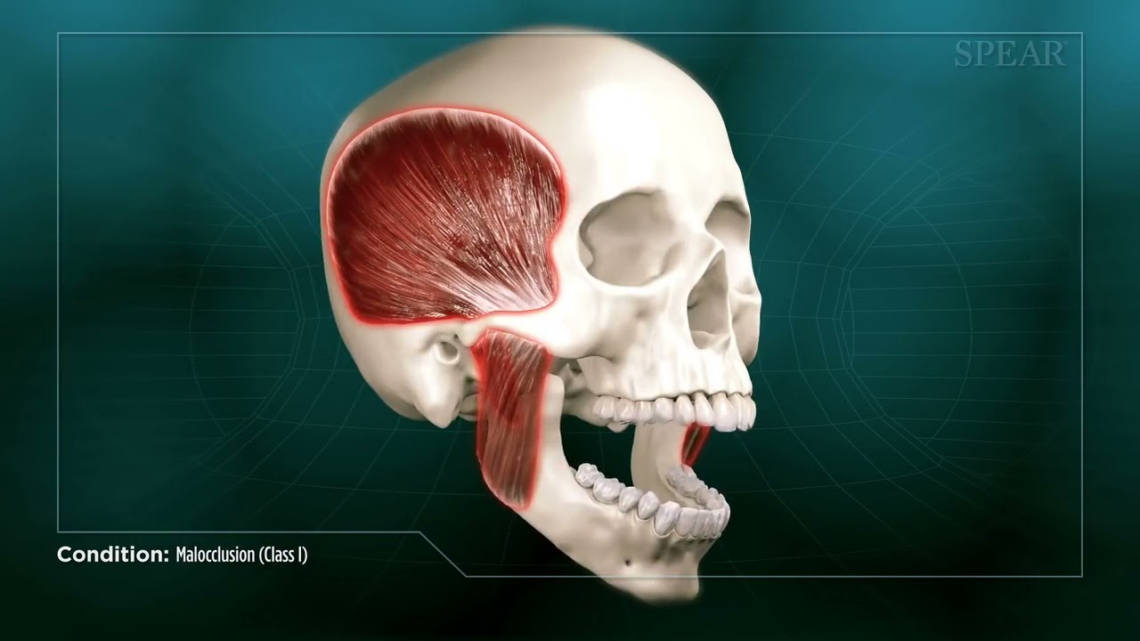
The Underexposed Connection between Malocclusion, Skeleton Relationships and Hair Loss
Introduction
Hair loss is a complex problem affected by various factors, from genetics to lifestyle. However, an unexpected connection has emerged in recent years, indicating a possible correlation between malocclusion (cheek teeth) and hair loss, especially in Class II Skeleton Malocclusion cases.
This connection, suggested by dental experts, is based on the theory that a displaced mandible may impede blood flow in the Superficial Temporal Artery (STA), which may lead to hair loss on the crown of the head.
In this blog post we go deep into this fascinating concept, exploring the scientific theories behind the link between malocclusion and hair loss, as well as a groundbreaking study that sheds light on this unusual relationship.
Understanding the Proposed Connection
Malocclusion, a condition in which the teeth do not fit correctly when the jaw is closed, is traditionally associated with dental and orthodontic problems.
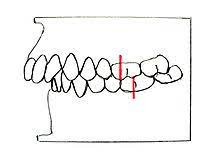
However, this groundbreaking study, which introduces the idea that malocclusion affects hair loss, states that Class II Skeleton Malocclusion, characterized by a retrognathic (retracted) mandible, can disrupt the blood flow in the Superficial Temporal Artery, potentially leading to hair loss on the crown of the head.
The Scientific Basis
The study goes deeper into the scientific basis of this unusual theory. In a healthy Class I skeletal relationship, the space between the base of the skull and the eminence of the condyl (the part of the lower jaw) is only 3.5 mm.
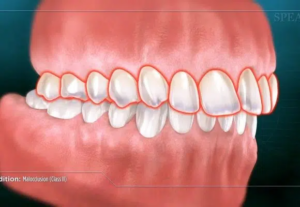
It has been established that Class II Skeleton Malocclusions with a retrognathic lower jaw measuring 3,5 mm or more are quite common. The purpose of this investigation is to expose facts and evidence suggesting that Class II Skeletural Malocclusion may cause hair loss by potentially blocking the blood flow through the Superficial Temporal Artery.
The Role of the Superficial Temporary Artery (STA)
The Superficial Temporal Artery is a crucial blood vessel route that is responsible for delivering blood to the scalp and especially to the crown of the head.
A possible occlusion or obstruction of blood flow through the STA due to a retrognathic mandible may disrupt the necessary blood supply to the hair follicles in this area, leading to thinning hair or hair loss.
Observation of Case Studies
The study presented here is based on a series of observation case studies. By analysing dental records, cephalometric X-ray photos (head X-rays) and visualizing patients, the study identifies a correlation between Class II Skeleton malocclusion and subsequent hair loss.
The analysis suggests that vascular anatomical differences due to different skeletal structures may be associated with the development of hair loss.
FAQ
- What is Class II Skeleton Malocclusion?
- Class II Skeletonal Malocclusion is a dental condition characterized by a retrognathic (repealed) lower jaw, which makes the upper teeth protrude more than the lower teeth when the jaw is closed.
- Class II Skeletonal Malocclusion is a dental condition characterized by a retrognathic (repealed) lower jaw, which makes the upper teeth protrude more than the lower teeth when the jaw is closed.
- How can a retrognathic mandible possibly lead to hair loss?
- The theory states that a retrognathic mandible can block or occlude the blood flow in the Superficial Temporal Artery (STA), which delivers blood to the scalp. Insufficient blood flow to the scalp, especially the crown, can cause hair loss.
- The theory states that a retrognathic mandible can block or occlude the blood flow in the Superficial Temporal Artery (STA), which delivers blood to the scalp. Insufficient blood flow to the scalp, especially the crown, can cause hair loss.
- Is there any scientific evidence to support this theory?
- The study mentioned in this blog post suggests a correlation between Class II Skeletural Malocclusion and hair loss. However, more research is needed to establish a definitive causal relationship.
- The study mentioned in this blog post suggests a correlation between Class II Skeletural Malocclusion and hair loss. However, more research is needed to establish a definitive causal relationship.
- Can correction of malocclusion by orthodontic treatment prevent hair loss?
- Although orthodontic treatment may improve teeth and jaw alignment, it is essential to understand that addressing hair loss often requires a comprehensive approach, which may include dermatological, nutritional and lifestyle factors.
- Although orthodontic treatment may improve teeth and jaw alignment, it is essential to understand that addressing hair loss often requires a comprehensive approach, which may include dermatological, nutritional and lifestyle factors.
- How can individuals with Class II skeletal malocclusion and concerns about hair loss seek guidance?
- Persons with such care should consult both a dentist or orthodontist to address their dental problems as well as a dermatologist or care professional for guidance on hair loss.
Additional Considerations on Theory
- Vascular Anatomy:
- A crucial aspect of this theory is the vascular anatomy of the head and scalp. The Superficial Temporal Artery (STA) is one of the main arteries that delivers blood to the scalp and plays an important role in maintaining the health of hair follicles. A disturbance in the blood flow to this area due to skeletal misalignement forms the basis of this theory.
- Potential for Reduced Blood Flow:
- Class II Skeleton malocclusion can lead to a retrognathic lower jaw, meaning that the lower jaw is positioned further backward than the upper jaw. This misalignement may lead to compression or obstruction of STA, reducing blood flow to scalp crown.
- Effects on hair follicles:
- Hair follicles need a constant supply of oxygen and nutrients that are worn by the blood to support their growth and health. A reduced blood supply may have adverse effects on the hair follicles, resulting in miniaturisation (dilution) and eventually hair loss.
- Chronic inflammation:
- The potential restriction of blood flow by Class II Skeleton malocclusion may also contribute to chronic inflammation in the affected area. Inflammation is a known factor in hair loss disorders and may further worsen the hair loss process.
- Individual Variation:
- It is important to note that individual variation plays a significant role in this theory. Not all individuals with Class II Musculoskeletal malocclusion will experience hair loss, and the degree of malocclusion and its effects may vary widely between humans.
- Multidisciplinary Approach:
- Addressing this possible relationship between malocclusion and hair loss requires a multidisciplinary approach. Patients who are concerned about both dental problems and hair loss should consult orthodontists or dentists as well as dermatologists for comprehensive evaluation and treatment options.
- Therapeutic Considerations:
- The theory encourages consideration for therapeutic approaches that include both dental and dermatological interventions. Correction of malocclusion by orthodontic treatment may improve blood flow and address hair loss problems.
- Further Research:
- Although the theory is intriguing, we stress that more research is needed to validate and clarify this connection. Conducting controlled studies and studies on the vascular and inflammatory aspects of this theory is essential to a better understanding of the relationship between malocclusion and hair loss.
In summary, the theory linking Class II Skeletural Malocclusion to hair loss is a stimulating concept that emphasizes the complex and multifactorial nature of hair loss.
Although it introduces intriguing possibilities, it is essential to approach this theory with some caution and await further scientific research to determine the causal relationship definitively.
Individuals with concerns about both malocclusion and hair loss should seek guidance from qualified dental and dermatological professionals for comprehensive care.
Conclusion
The intriguing connection between malocclusion and hair loss, especially in the context of Class II Skeletural Malocclusion, is an evolving field of study.
Although the concept seems unusual, the study discussed provides valuable insights into the possible relationship between skeletal structures, blood flow and hair loss.
Nevertheless, further research is needed to determine the causal relationship between malocclusion and hair loss. If you are worried about hair loss, it is advisable to consult both dental and healthcare professionals for personalized guidance and solutions.


You might like this too.

Breezula: A brand new promising treatment for hair loss

Is semi-permanent hair dye harmful to your hair?