

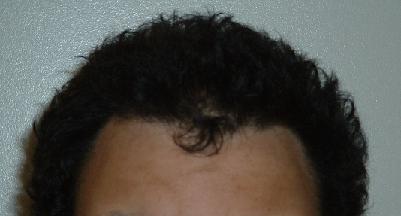
What's the difference between a widow's peak and a wandering hairline?
Hair loss is one of those subjects that many people talk about uncomfortablely, but which affects almost everyone. Whether you're 25 or 55, the first signs of a changing hairline can be quite confronting. Especially when you're not sure if you're dealing with a widow's peak or a regressing hairline.
After years of research and conversations with dermatologists, trichologists and people who have been through this challenge, I want to give you the complete guide I would have liked to have myself when I first noticed those changes in the mirror. Because understanding the difference between these two patterns can literally make the difference between worrying for years and finding the right solution.
Why This Distinction Is So Crucial
Let's face it. A lot of people think all hair loss is the same. You lose her, period. But nothing else is true. A widow's peak and a wandering hairline are as different as a flu and pneumonia they may sometimes resemble one another, but the causes, treatments and forecasts are completely different.
This distinction is not only important for your wallet (some treatments cost thousands of euros), but also for your mental well-being. There is a world of difference between accepting that you have a natural widow's peak that may not even need treatment, and realizing that you are dealing with progressive hair loss that requires action.

The Widow Peak: More Than Genetics Only
What Is A Widow Peak Really?
A widow's peak is that characteristic V-form that some people have in the middle of their forehead, where the hairline forms a point. The name comes from the Victorian era, when it was believed that women with this hairline would rather become widows, a superstition that fortunately has long been obsolete.
What many people don't know is that a widow's peak is not necessarily a sign of hair loss. It can be a completely natural trait that you have from birth, similar to the shape of your nose or the color of your eyes. Many people have a widow's peak their whole life without ever losing one hair.
Different Types of Widow Peaks
Not all widow peaks are the same. Dermatologists usually distinguish three categories:
The Subtle Widow Peak: A light V-shaped shape that hardly stands out and often becomes visible only when the hair is combed backwards. This is the most common form and mostly completely natural.
The Speaking Widow Peak: A clearer V-form that is always visible regardless of hairstyle. This too can be completely natural, although it is sometimes part of a beginning baldness pattern.
The Extreme Widow Peak: A very sharp, deep V-form that is often accompanied by dilution on the sides. This is usually a sign of novice androgenic alopecia (male baldness).
How Do You Recognize A Real Widow Peak?
The real test is in stability. A natural widow's peak does not change or changes extremely slowly over years. If you look at old photos from 5-10 years ago and the shape is almost identical, then you probably have a natural widow's peak.
Also note the hair quality around the widow's peak. With a natural widow's peak, the hair is as thick and healthy as the rest. With novice baldness, you often see thinner, softer hair (so-called "vellus hairs") around the tip.
Refocusing Hairline: The Real Alarm Signal
The Progressive Nature of Haarluit
A receding hairline is a completely different story. This is active hair loss where the hairline literally withdraws from its original position. The classic pattern usually begins to sleep (the so-called "so-called "Temple Recession") and can extend to the middle of the forehead.
The treacherous thing about a receding hairline is that it often starts sneaking. Many people do not notice it until it is well advanced. That's why it's so important to recognize the early signs.

The Norwood-Hamilton Scale: Your Roadmap
Professionals use the Norwood-Hamilton scale to classify the degree of hair loss. This scale ranges from type I (no noticeable hair loss) to type VII (extensive baldness with only a wreath of hair around the back and sides).
Type I-II: Slight return to sleep, often hardly visible. Type III: Clear M-shape begins to emerge, with noticeable reversal. Type IV-V: Significant hair loss at the front, possibly with dunning on the crown. Type VI-VII: Extensive baldness with connection between frontal and crown hair loss.
Why Timing So Crucial Is
In the case of receding hairlines: The sooner you intervene, the better the results. Hair follicles that have completely disappeared cannot be repaired with medication. But hair follicles that are weakened but still functioning can often be saved.
This is why many dermatologists advise to take action at the first signs of retreat, even if it is hardly visible yet. Prevention is always more effective than recovery.
The Scientific Background: DHT, The Silent Enemy
How Dihydrotestosterone Destroys Your Hair
To really understand why hair loss happens, we need to talk about dihydrotestosterone (DHT). This hormone, produced from testosterone by the enzyme 5-alpha reductase, is the main culprit in androgenic alopecia.
Timing Is Everything
The effectiveness of each treatment depends on the stage you start. Hair follicles that are fully minimized cannot be restored with medication.
DHT binds to receptors in the hair follicles, especially those at the front and top of the head. This causes a process called "Miniaturisation', where the hair follicles slowly shrink. The hair gets thinner, weaker and grows shorter, until the hair follicle eventually stops producing hair.
Interestingly enough, hair follicles at the back and sides of the head are genetically programmed to be resistant to DHT. That's why men with severe baldness often retain their hair wreath.
Genetics: More Complex Than You Think
Many people think hair loss is only from the fatherly line, but that's a myth. The genetics of hair loss is much more complex and is influenced by genes of both parents. Recent research has identified over 200 genetic variants associated with male baldness.
What does this mean practically? Even though your father has a full hairdo, you can still develop hair loss if you have inherited the wrong combination of genes from both parents.
Treatment possibilities: From Basic to Advanced
Medicinal Treatments: The Facts
Minoxidil (Rogaine): This is often the first step. Originally developed as a blood pressure medicine, researchers accidentally discovered that it stimulates hair growth. It works by improving the blood supply to hair follicles and prolonging the anagenic phase (growth phase) of hair growth.
Many successful persons have a widow's peak . . it is a characteristic and often attractive facial stretch
Why "widow peak"?
The term comes from the 18th century. Women then wore special headgear called "widow It was believed that women with a natural V-shaped hairline would rather become widows.
Realistic expectations: 65-85% of users see stabilisation of hair loss, 30-40% see modest regrowth. Results are apparent after 3-6 months of consistent use.
Finasteride (Propecia): This medicine blocks the enzyme 5-alpha reductase, reducing testosterone conversion to DHT. Studies show that DHT levels in the scalp can decrease by 60-70%.
Efficacy: 83% of men keep their hair stable, 65% see some regrowth after two years of use. It works best in hair loss on the crown and moderately in frontal hair loss.
Dutasteride: A more powerful version of finasteride that blocks both types of the 5-alpha reductase enzyme. Not officially approved for hair loss in all countries but is prescribed off-label.
Advanced Treatments: The New Generation
Microneedling: Using small needles to make micro-wounds in the scalp, which stimulates natural healing and hair growth. Studies show that microneedling can significantly increase the effectiveness of minoxidil.
PRP (Platelet-Rich Plasma): Your own blood is processed to obtain a concentrate of platelets, which is then injected into the scalp. The growth factors in platelets can revitalize hair follicles.
Laser therapy (LLLT): Low-level laser therapy uses specific wavelength light to stimulate cellular activity in hair follicles. Approved devices show modest but consistent results.
Hair transplantation: The Permanent Solution
Modern hair transplantation is a world of difference from the . Two main techniques dominate:
FUE (Follicular Unit Extraction): Individual hair follicles are harvested one by one from the donor area and transplanted to bald areas. Minimal scarring, faster recovery.
FUT (Follyicular Unit Transplantation): A strip of scalp is removed from the donor area, divided into individual grafts and transplanted. More hair follicles in one session, but a linear scar.
Costs: What can you expect?
Minoxidil: €15-40 per month Finasteride: €20-60 per month (brand medicine vs generic) PRP: €150-400 per session, 3-6 sessions per year Hair transplantation: €2000-8000 depending on the number of grafts and clinic
Frequently Asked Questions from De Praktijk
"Can Stress Really Cause a Widow Peak?" '
I often come across this question on forums. The short answer: not directly. Stress may cause telogen effluvium (temporary hair loss), but this does not create a permanent widow's peak. Chronic stress may exacerbate existing androgenic alopecia.
"My father has a widow's peak, do I get it too? '
A natural widow's peak can be hereditary, but it's not a guarantee. Genetics is complex and you can have a completely different hairline than your parents.
"Can I prevent a widow's peak? '
If it is a natural widow's peak: No, and you don't have to. If it is part of androgenic alopecia: early intervention with proven treatments may slow or stop progression.
"Why do some people get hair loss at 20? '
Androgenic alopecia can start in late teens. It depends on your genetic sensitivity to DHT and the amount of DHT you produce. Early hair loss is often more aggressive and requires faster action.
Psychological Impact: The Unspoken Story
The Mental Tol Van Haarluit
Let's be honest about something that is often minimized: hair loss can have a huge psychological impact. Studies show that men with hair loss experience significantly higher levels of stress, depression and social anxiety.
For many people, their hair is closely linked to their identity, confidence and how they think others see them. Its loss can cause feelings of aging, loss of attractiveness and even grief.
Coping Strategies That Real Work
Realistic Objectives Couples: Don't expect miracles of treatments. Maintaining what you have is often a victory.
Focus on What You Can Check: You may not be able to stop your hair loss completely, but you can improve your overall health, condition and style.
Search Support: Online communities can be valuable, but avoid the . . .
Lifestyle Factors: The Underrated Influences
Nutrition And Hair Growth
Although supplements cannot stop the androgenic alopecia, a good diet can support overall hair health:
Protein: Her hair is 90% keratin, a protein. Ensure sufficient high-quality protein in your diet.
Iron: Iron deficiency can worsen hair loss, especially in women. Have your irons checked if you have unexplained hair loss.
Vitamins: B-complex vitamins, vitamin D and biotin support hair health, but supplements only help with shortages.
Haircare: Myths And Facts
Myth: Frequent hair washing causes hair loss. Fact: Washing hair removes only hair that would already fall out. It doesn't speed up hair loss.
Myth: Hair gel and styling products cause baldness. Fact: Normal styling products do not cause permanent hair loss, although aggressive styling may cause temporary damage.
When to a specialist?
Red Flags Require Professional Help
- Sudden, rapid hair loss (within weeks or months)
- Hair loss accompanied by itching, pain or inflammation
- Kale spots not following the typical pattern of androgenic alopecia
- Hair loss before puberty or after menopause
- Systemic symptoms (fatigue, weight changes, etc.)
What To Expect From A Consult
A good dermatologist or trichologist will:
- Your medical history and family history
- Perform a physical examination of your scalp
- Possible trichoscopy (digital scalp analysis)
- Suggest blood tests to exclude other causes
- Prepare a treatment plan based on your situation and goals
The Future of Hair loss treatment
Promising Developments
JAK inhibitors: Medicines blocking the JAK-STAT signal path show promising results in clinical trials.
Stem cell therapy: Research into the use of stem cells to regenerate hair follicles is ongoing.
Cloning From Hair Bags: Although still experimental, this could ultimately offer unlimited donor hair follicles.
Gene therapy: Future treatments might address the genetic causes of hair loss.
Practical Action Plan: What to do now?
Step 1: Document Your Situation
Take pictures of your hairline every 3 months under equal light conditions. This helps you to objectively assess whether changes occur.
Step 2: Determine Your Type
Use the information in this article to determine whether you have a widow's peak or a receding hairline. If in doubt, consult a professional.
Step 3: Set Realistic Goals
Determine what you want to achieve: stabilisation, modest regrowth, or dramatic change. Adjust your treatment options to this.
Step 4: Start Conservative
Start with proven treatments with few side effects (minoxidil, good nutrition, stress management) before turning to more aggressive options.
Step 5: Give Treatments Time
Most treatments take 6-12 months to show their full effect. Be patient and consistent.
To Final: Acceptance and Action Balance sheet
The most important thing to remember is that neither a widow's peak nor a wandering hairline means the end of the world. Yes, hair loss can be frustrating and discouraging. But with the right knowledge, realistic expectations and appropriate action you can deal with it effectively.
Whether you choose treatment, acceptance, or a combination of both of these is most important to make an informed decision that fits your values, lifestyle and goals. Your hair doesn't define you, but how to deal with challenges does.
Remember: You're more than your hairline. But if that hairline worries you, you now have the knowledge to do something about it.

Hierboven kun je een duidelijk verschil zien tussen de twee. Ik heb overigens over beide heren hierboven een artikel geschreven over hun haarverlies lees daarover hier meer.
Is Chris Hemsworth losing his hair? A closer look!
What did Matthew McConaughey do to fix his hair loss?


One reaction
Pingback: