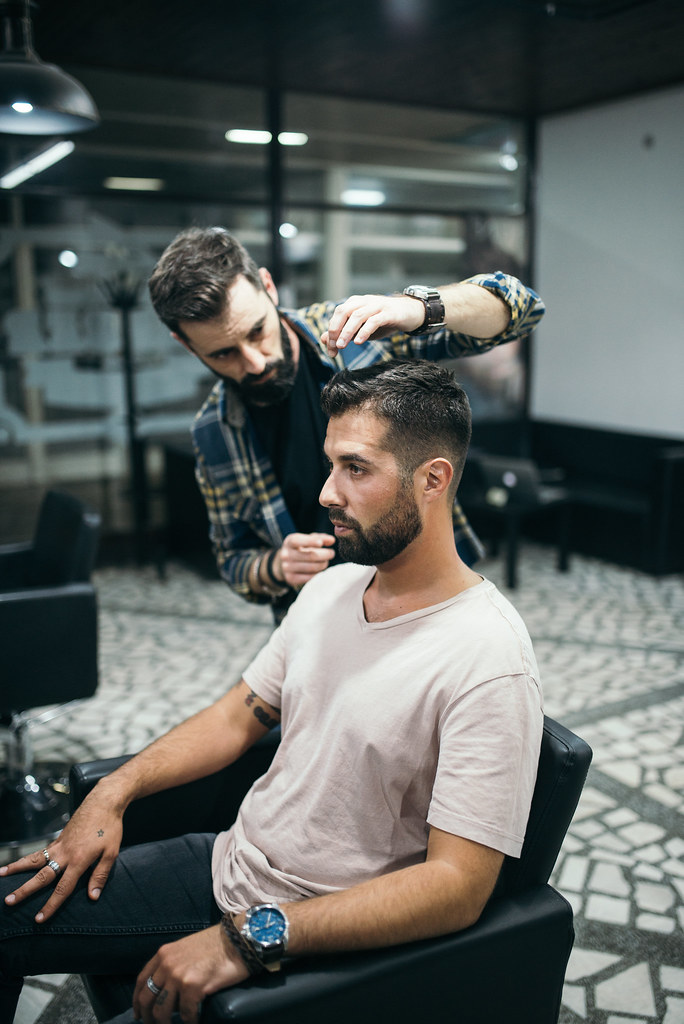
Can gel or wax cause hair loss?
Ever stood in front of the mirror, hair gel in the hand, and wondered, "Does this make me bald?"
You're not the only one.
With numerous styling products in the shelves, it makes sense to doubt what we put on our scalp every day.
Let's look through the murmur and be honest about gel, wax and your precious hair bags.
This video briefly but forcefully explains the effect of gel on hair loss.
Can you lose her because of Gel? The Surprising Truth 💔
Here it comes: That pot of styling gel in your bathroom cabinet is not necessarily the biggest enemy of your hair.
But neither is your best friend.
The relationship is... complicated.
Most hair gels don't cause direct hair loss. Your genetic predisposition plays a much bigger role in whether to keep a full hairdo to an old age.
But—And this is a big but—Misuse of styling products can definitely contribute to hair problems.
When gel accumulates on your scalp, it can:
- Hide hair bags
- Cause inflammation
- Lead to hairbreak
- Make existing hair loss look worse
The investigation? Limited but significant.
A study in the International Journal of Trichology found that styling products are related to more hair fracture. Another study, published in the Journal of the American Academy of Dermatology, linked frequent use of styling products to its dilution.
Not exactly what you want to hear when you try to look your best, right?
HARGEL TRUTH
The pie that no one tells you
No, but excessive use can exacerbate existing problems by clogging hair follicles and accumulation on the scalp.
Absolute NO-GO! Provides fracture, constant friction to your pillow and disrupts the natural recovery process of your hair during the night.
Not the color, but the ingredients determine quality! Always check the composition on alcohols, parabens and other harmful substances.
Absolutely recommended for daily use! Less dehydration, less irritation and much better for frequent use without damaging your hair.
- Aloe vera (smoothing for scalp)
- Vitamin E (nourishing and protective)
- Natural oils (argan, jojoba)
- Panthenol (fortified for hair fibres)
- Glycerin (natural moisturiser)
- Drying alcohols (SD, denat)
- Parabens (harmful preservation)
- Synthetic fragrances (irritating)
- Sulphates (strips of natural oils)
- Silicones
- Light fixation
- Healed scalp
- Natural shine
- Easy access
- Medium fixation
- Rich in omega-3
- Nourishes during styling
- Customize
- Light fixation
- Deep Conditioner
- Antibacterial activity
- Perfect for dry hair
- Start with clean hair Product adheres better and causes less accumulation.
- Less is more Use only a quantity the size of a coin.
- Avoid scalp Focus on the middle lengths and ends of your hair.
- Washed out completely Use an illuminating shampoo every week to prevent build-up.
- Schedule product-free days . Give her time to breathe and, of course, recover.
Paste the ingredients list of your gel below to analyze the quality:
Recommended Products:
Sleeping with Gel in your hair: A Nightly Error? 😴
Imagine. You perfected your hair for a night out. It's late, you're tired, and washing your hair before bedtime seems exhausting.
"What's the problem with once sleeping with gel in my hair?" You think?
Wrong call, buddy.
Sleeping with hair products creates the perfect environment for problems:
- Your product covered hair rubs against your pillow all night, causing friction and fracture
- Gel hardens your hair, making it more fragile during those 8 hours of twisting and turning
- Your scalp cannot "breathe" properly, which disrupts the natural nocturnal recovery process
A simple solution? Keep a mild cleaner with your washbasin for quick night washing. Your hair will thank you with stronger growth and less fracture.

Is Yellow Gel Bad For Your Hair? The Ingredients Who Do It 🧪
Not all gels are equal.
That bright yellow gel that promises "extreme hold" might be full of ingredients you hate:
- Alcohol (drying)
- Parabens (potentially harmful preservatives)
- Synthetic fragrances (irritating)
- Sulphates (strips of natural oils)
But color is not the real indicator of quality—It's about what's inside.
Science is clear: frequent exposure to aggressive chemicals in cheaper gels can irritate your scalp, leading to inflammation and potentially disrupt healthy hair growth cycles.
Think about it: your scalp is skin. Sensitive skin. Would you put alcohol and synthetic chemicals on an infected face? Probably not.
Then why treat your scalp differently?
Which Gel is good for your hair? Choose wisely 👍
The best gel for your hair does not have to be expensive—It must be smart.
Search for these winning ingredients:
- Aloe vera (soothing)
- Vitamin E (nourishing)
- Natural oils such as argan or jojoba (hydrating)
- Panthenol (fortified)
A good quality gel will:
- Fix your hair without cementing your hair
- Easy washing out without drying your hair
- Make your hair feel soft, not crispy
- Minimum artificial additions contain
Pro tip: Less is more. A quantity the size of a quarter of quality gel always wins from half a jar of cheap junk.
Your styling routine should enhance the natural beauty of your hair, not fight it.

Is Wax bad for your hair? The Alternative Question 🤔
Wax vs. gel: The eternal styling debate.
Many people switch to wax assuming it's automatically healthier, but is it?
The truth is nuanced:
- Wax generally contains less drying-out alcohols than gel
- BUT wax is often harder to wash completely
- Wax offers more flexible fixation with less crunchiness
- Actually incomplete removal can lead to accumulation problems
The verdict? Neither is inherently "bad" if used correctly and thoroughly removed.
The real enemy is not the product—It's the construction and improper removal.
Each styling product must be completely washed out before it can cause problems. This is where many people fail in their hair care routine.

Natural Gel alternatives: Styling Solutions by Mother Nature 🌱
Nature offered styling solutions long before chemists created the first hair gel.
These natural alternatives may surprise you with their effectiveness:
Aloe Vera Gel (Pure)
- Lightweight fixation
- Skin healing properties
- Natural shine
Seed gel (Selfmade)
- Average fixation
- Rich in omega-3 fatty acids
- Feeds during styling
Coconut oil & Honey Mix
- Light fixation for wavy styles
- Deep conditioning benefits
- Antibacterial properties
The advantage? You probably already have some of these ingredients in your kitchen.
A simple linseed gel recipe:
- Boil 60 grams of linseed in 500 ml of water
- Let simmer to it
- Sieving by a cheese cloth
- Add some drops of essential oil (optional)
- Store in a refrigerator and use within 2 weeks
Of course, not always means ineffective. These alternatives can deliver impressive results while improving the condition of your hair.
Healthy Gel Options For Any Hair Type 💆
Your hair type should determine your choice of gel—not marketing or packaging.
For Fine Hair:
- Lightweight, voluminous formulas
- Proteins such as keratin or wheat protein
- Avoid heavy oils and butters
For Fat, Stug Hair:
- Formulas with stronger fixation
- Hydrating ingredients such as shea butter
- Fluid resistance to fluff control
For Curly Hair:
- Non-alcoholic gel with high moisture content
- Defining ingredients such as linseed or root
- Glycerin for moisture balance
One-size-fits-all does not exist when it comes to styling products. What works for your friend's thick waves can be disastrous for your fine, steep hair.
Listen to what you tell her—If it feels dry, fragile or looks dull after using a particular gel, your hair sends you a clear message.
Gel Without Alcohol: The Game Changer 🌟
Here's an industrial secret: Alcohol in hair gel isn't all bad.
Fatty acids (cetyl, stearyl) hydrate actually. It's the drying-out alcohols (SD alcohol, denatured) you want to avoid.
But for simplicity, alcohol-free options offer clear advantages:
- Less drying out for hair shafts
- Reduced risk of scalp irritation
- Better for frequent use
- Softer for colored hair
Brands begin to understand this, with increasingly alcohol-free options appearing on the shelves every year.
The price difference? Often minimal. The benefit to your hair health? Significant.
Can Help Gel At Dunner Becoming Hair? The Styling Strategy 🔍
Dealing with thinning hair can be frustrating. Can gel help or exacerbate this situation?
The strategic answer: It depends on your approach.
Gels can create the illusion of fuller hair by:
- Add texture and dimension
- Create separation between strands
- Lift to give at the roots
- The "flat" appearance of fine hair to reduce
But technology is extremely important:
- Apply to damp (not wet) hair
- Focus on the roots for volume
- Use less product than you think you need
- Style up and out for fullness
Misapplication—heavy product, smooth down styled hairstyles—can accentuate thinning areas.
Remember: gel is a styling tool, not a hair loss solution. For actual regrowth you need proven treatments such as minoxidil or prescription options.
How to use your hair gel without damaging your hair 🛡️
Prevention always wins damage recovery. Here's your damage-free gel routine:
- Start with clean hair Product stick better and causes less accumulation
- Use high quality products . Your hair deserves better than the cheapest option.
- Apply to damp hair . Not soaked, not completely dry
- Use the "less is more" approach Start with a small amount, add more if necessary
- Distribute evenly . Use a comb with wide teeth for even distribution
- Keep it away from your scalp Focus on the middle length and points
- Delete Full . Use an illuminating shampoo once a week
- Regular deep conditioning . Apply moisture after styling
This routine minimizes the potential negative effects while maximizing your styling results.
The Weekly Hair Detox That Needs Your Head Skin 🧼
Even with careful application, product construction takes place. Your scalp needs a regular reset.
Try this weekly detoxroutine:
- Use an illuminating shampoo (free of silicone and waxing)
- Massage your scalp for 2-3 minutes to stimulate circulation
- Rinse with cool water to close the hair scales
- Apply a nourishing hair mask, focus on the points
- Finish with an apple cider vinegar wash (15 ml in 250 ml water) for additional cleaning
This routine removes residues that normally wash may miss and reset your scalp environment.
Consider it a weekly big cleaning for your hair ecosystem.
Secrets Of Professional Stylists For Use of Gel 💇
Professional hairstylists use gel differently than the average person. Their techniques can make a world of difference:
- Apply layer by layer . For a more natural result, divide hair into sections and apply product systematically
- Combine products strategically . A light mousse as base under your gel can add fullness without heaviness
- Temperature is important Heat gel between your palms to make it softer and more even
- Styling tools make the difference Low heat hair dryer over gel-styled areas for longer fixation without crunchiness
- The 90% dry rule . The best time to apply gel is when your hair is 90% dry, not dripping wet or completely dry
These techniques maximize styling results while minimising hair damage.
Her Myths Depressed: What Science Says About Gel 🧪
Let's address a few persistent myths about hair gel:
Myth 1: "Gel causes permanent hair loss" Fact: Gel itself does not cause permanent hair loss. Excessive styling, pulling or chemical damage associated with product use may lead to contraction alopecia or hair fracture, but the product alone does not cause permanent follicular damage.
Myth 2: "Natural gels have no shelf life" Fact: With the right techniques, natural gel alternatives can offer surprisingly effective fixation. For example, linseed gel can create a medium to strong hold that lasts for hours.
Myth 3: "You can't use too much gel" Fact: Excessive gel use leads to product construction, which can result in hair fracture, scalp problems and an unhealthy-looking hairstyle. Less is often more effective.
Myth 4: "All gel dries your hair out" Fact: Hydrating gel formulas with aloe vera, glycerin and natural oils can actually add moisture to the hair during styling.
Choose science, not marketing, when selecting your styling products.
Personal Experiences: Real Stories With Gel Styling 👨🦱
Mark, 34, loved his daily gel routine until he noticed his hairline became thinner. "I thought gel was the cause. But when I went to a dermatologist, I discovered it was genetic baldness. The gel only made it more visible because it entangles the remaining hairs."
He switched to a lightweight, non-alcoholic formula and changed his application method. "Now I use it economically, keep it away from my scalp, and it was out every night. My hair feels healthier and the thin spots are less striking."
Sanne, 28, experimented with homemade alternatives. "I was worried about the chemicals in regular gels. My linseed gel gives just as much fixation for my curls, but my scalp no longer itches and my hair feels softer."
These real stories underline an important point: It's not just what you use, it's how you use it to make a difference.
Custom-made Gel Solutions For Your Specific Hair Problems 🎯
For a Itchy, Sensitive Head:
- Search for gels with aloe vera, teatree oil or chamomile
- Avoid synthetic fragrances completely
- Consider transparent formulas with minimum ingredients
For Damaged, Overtreated Hair:
- Choose protein-infused gels with keratin or wheat amino acids
- Search for repairing ingredients such as panthenol and ceramides
- Always use a heat protector when you blow dry after applying gel
For Curly, Fluffy Hair:
- Choose gel formulas rich in glycerin and vegetable oils
- Avoid drying alcohols completely
- Search for frizz-controlling polymers of natural origin
For Dunner Becoming Hair:
- Use volume raising gels with thickening polymers
- Avoid heavy, oily formulas that flatten the hair
- Choose products with caffeine or peptides that stimulate the scalp
Your unique hair situation requires a personalized approach.
The balance sheet: Style Without Sacrifice 🔄
Hair gel makes you bald? Not directly, no.
But as with most things in life, it's about balance and smart choices.
- Use quality products designed for your hair type
- Apply sparingly and correctly
- Remove completely at end of day
- Give your hair product-free days to recover
- Take immediate action on scalp irritation
Your hair is part of how you present yourself to the world. Treat it with respect, and it will reward you with a better look, easier styling, and healthier growth.
Remember: Your best hair days come from understanding what your unique hair needs—do not follow trends or excessive use of products.
What's your experience with hair gel? Did you find any products that work without causing any problems? Share your thoughts and let's learn from each other's hair travels.
Finally, we all try to look our best without sacrificing the health of our hair.
This article is based on current trichological research and expert opinions but is not a substitute for personalized medical advice. If you experience significant hair loss, consult a dermatologist for proper diagnosis and treatment recommendations.
Shopping list: What Do You Buy (And Avoid) 🛒
Buy Well:
- Alcohol-free gels with natural fixing ingredients
- Clarifying shampoos for weekly deep cleansing
- Nourishing conditioners to supplement moisture after styling
- Wide-tooth combs for uniform product distribution
- Satins or silk pillowcase (if you sometimes forget to wash her at night)
Avoid:
- Gels with high concentrations of dehydrated alcohols
- Products containing artificial colouring matter and synthetic fragrances
- Cheap gels that remain as white flakes
- Styling products with silicone that cause accumulation
Invest in quality where it counts, and your hair will notice the difference.
Look forward: The Future of Haarstyling 🔮
The industry is rapidly evolving into healthier styling solutions:
- Bioadaptive formulas that adapt to your specific hair condition
- Vegetable fixatives that deliver performance without disadvantages
- Microbiome-friendly products that support the natural balance of your scalp
- Personalized formulas based on your unique hair chemistry
The future of hair styling lies in products that work with—Not against—Your natural hair.
The choice is yours: stick to old habits or adapt to what's best for your long-term hair health.
Your hair deserves the best of both worlds: great style and optimal health.
Conclusion: The Golden Midway 🌟
The story of hair gel is not black and white. It is not about total avoidance or carefree use—It's about conscious choices.
With the right knowledge, products and techniques you can enjoy the styling benefits of gel without the potential disadvantages.
Listen to your hair. Choose quality. Be consistent with your routine.
And remember, healthy hair is always in fashion, no matter which style you choose.
Share your own gel experiences and discoveries with others. We're all in the same hair story, learning as we go, looking for that perfect balance between style and health.
Your hair travel is personal. Make every choice an informed one.


You might like this too.

How often do you have to wash your hair with ketoconazole shampoo for maximum results against hair loss?

Does black cumin oil help as a natural alternative to hair loss?