


Did Lewis Hamilton have a hair transplant?
Lewis Hamilton is the Formula 1 megastar who claims to be unbeatable on the circuit, but loses the battle against his own hair follicles outside the circuit? Recent photos suggest that the British racer has suffered hair loss in recent years, and we are here to investigate the rumors and to find out more about Hamilton's fight against hair loss.
In an interview from 2006, Hamilton said he suffered from hair loss, an early sign of male baldness.
Although it is possible that Hamilton started a comprehensive health treatment plan to tackle hair loss, experts suspect that Hamilton is likely to have had a hair transplant.
It also noticed that Hamilton's hair went from thin to thick and lush in a short time, which is a strong indication of a hair transplant. Alexander also suggests that Hamilton might be using medication to prevent further hair loss.
In the series of celebrities with hair loss comes Lewis Hamilton offer this time. Buckle up and watch Lewis Hamilton tackle his baldness!
Other celebrities that have so far come up in this series include: Donald Trump, Andrew Tate, Lebron James, Elon Musk, David Beckham, Rafael Nadal, Lewis Hamilton, Wayne Rooney, Justin Bieber, Matthew McConaughey, Jamie Foxx, Jada Pinkett, Chris Hemsworth and Chris Evans, Ashton Kutcher, Floyd Mayweather, Pete Davidson, Bradley Cooper, Akon, Prince Harry, Conor McGregor, Arnold Schwarzenegger, Robbie Williams, Johnny Depp, Ben Affleck, Tristan Tate, Hugh Jackman, Andrew Garfield, Jordan Peterson, Robert Pattinson, Ryan Reynolds, John Cena, Steve Carrell, Sebastian Vettel, Nicolas Cage, Tom Hanks, George Clooney, James Franco, Adam Levine, Matt Damon, Sylvester Stallone, Elton John, Daniel Craig, John Travolta, Mel Gibson, Henry Cavill, Chris Brown, Brad Pitt, Gordon Ramsay, Tiger Woods, Brendan Fraser, Harry Styles, Sam Smith, Kanye West, Joe Biden, Machine Gun Kelly, Logan Paul, Jake Paul and Joe Rogan.
The intention behind the "Celebrities with Hair Loss' series is to emphasize That you're not alone in the challenge against hair loss.
Who's Lewis Hamilton?
Lewis Hamilton is a British racing driver currently competing in Formula One for the Mercedes-AMG Petronas Formula One Team. Hamilton is seven-time world champion Formula 1 and is generally regarded as one of the biggest drivers in the history of sport. He holds several records in the sport. Including most pole positions, most victories in one season and most points in his career.

He won his first Formula One World Championship in 2008 with McLaren before switching to Mercedes in 2013. Where he won six more championships. In recent years, he's been known mostly because he's getting his ass kicked by our own hero Max Verstappen.
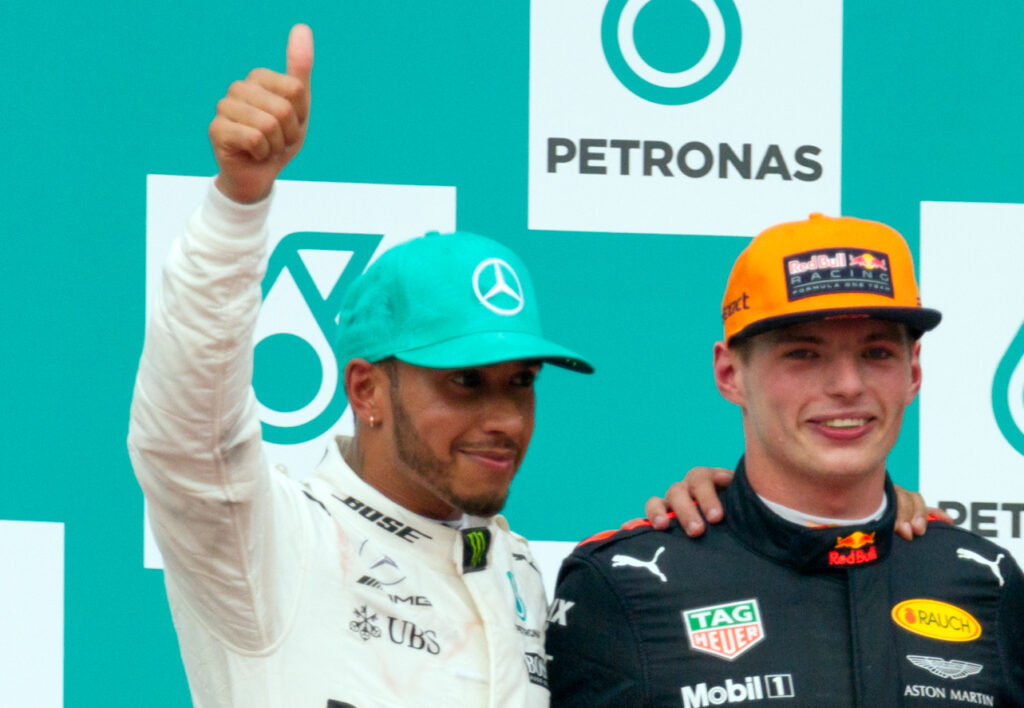
Lewis Hamilton's hair loss over the years
It has been speculated for years whether Lewis Hamilton, the very successful Formula 1 driver, has undergone a hair transplant. In an interview from 2006, Hamilton said he was suffering from coves. This is usually an early sign of baldness. Below you see clear displays of hair loss.
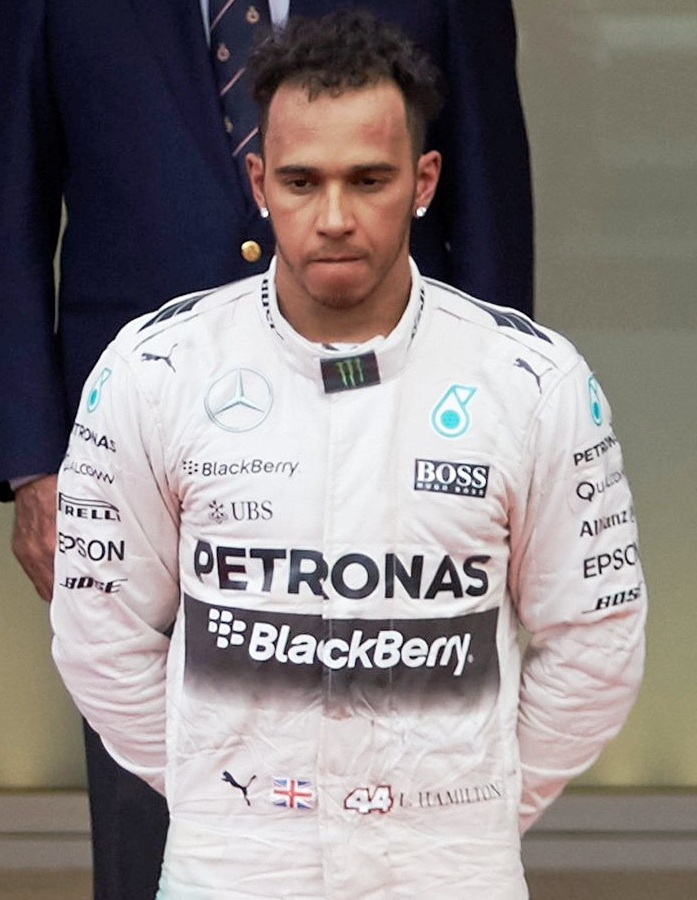
Although no one likes to be confronted with their own mortality, there is hope for those who share Hamilton's hair loss. With the help of modern treatments and interventions baldness can be a reversible problem. In the picture below you see a clear difference in the hair thickness of Hamilton.
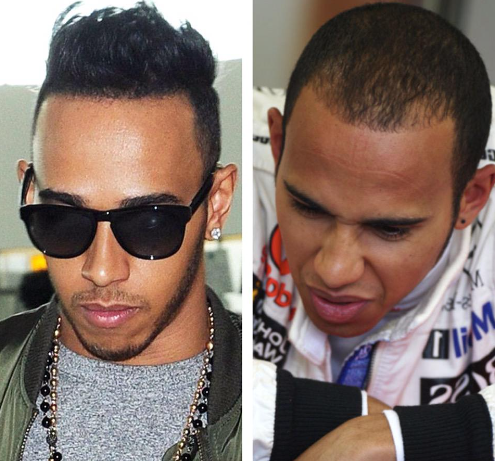
Hamilton's hair went from thin to thick and lush in a short time, which is a strong indication of a hair transplant.
Hair loss can be caused by several factors, of which genetics is the most important. Other factors that can contribute include stress, underlying medical and hormonal problems and unhealthy lifestyles.
The impact of hair loss can be significant and disturbing. So it's no surprise that Lewis Hamilton's public confession about his own hair loss caused a stir. Both the fashion and its community.
Genetically determined hair loss
Most hair loss is caused by genetics, a common condition known as baldness with a male pattern or alopecia androgenetics. In this condition genetic predisposition leads to male or female baldness. In which hormonal and genetic triggers cause the hair follicles to miniaturize. When they miniaturize, they produce thinner and shorter hairs than normal, until the follicle eventually is unable to produce new hair.
Alopecia androgenetics affects approximately 80 percent of men to a greater or lesser extent and is usually visible from the late twenties to the early thirties. The condition is hereditary and is passed on by both sides of the family, with most men showing a degree of baldness against their 50th.
The good news is that today there are many treatments available for genetic hair loss. The most common is oral finasteride . . . . a pill that is often used to treat baldness in the male pattern. Other treatments include topical solutions such as minoxidil, laser treatments and hair transplants.
Hair loss under the influence of hormones
In addition to genetics, hormones can also play a role in causing hair loss. Thus, thyroid disease can affect the texture, growth and shine of the hair due to a disturbance of the hormone balance in the body. Pregnancy can also cause an increase in hormones that can lead to hair loss. Other medical conditions, such as anaemia or postnatal depression, can also cause hair loss.
Besides medical causes, some types of hair loss are due to lifestyle factors. Stress can cause hair to fall into large pieces. Unspoilt diets, ill-sitting hats and tight braids (Hamilton has braided his hair nowadays) are other things that can damage the scalp and lead to hair loss.
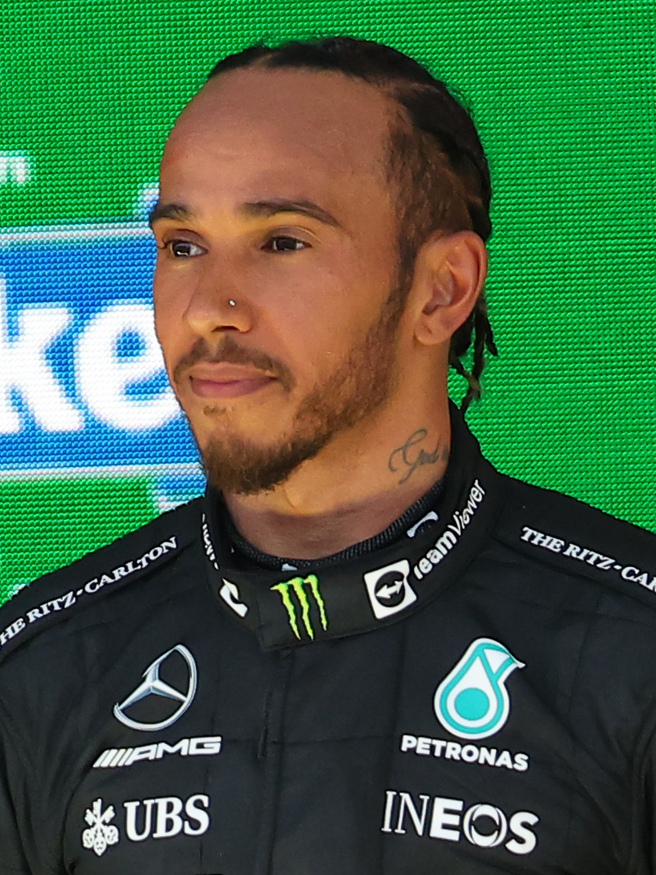
Treating hair loss
There are currently a number of treatments available to treat hair loss, but these vary depending on the underlying cause of the problem.
The most popular treatment is finasteride, which in many cases can help to slow or even stop baldness in the male pattern. Finasteride is an oral medicine that blocks the enzyme that converts testosterone to dihydrotestosterone, which is partly responsible for the development of baldness. There is also another drug called dutasteride, which is sometimes recommended. Other treatments are minoxidil, which can be used twice a day to block the hormone that causes hair loss. Laser therapy can also help to stimulate the growth of new hair follicles, while hair transplantation can help to fill bald spots.
In conclusion, did Lewis Hamilton have a hair transplant?
Lewis Hamilton is seven-time world champion Formula 1 and one of the most successful drivers in the history of sport. However, it has been speculated for years whether he has had a hair transplant. In an interview from 2006, Hamilton said he suffered from hair loss, an early sign of male baldness.
Although it is possible that Hamilton started a comprehensive health treatment plan to address the problem, experts believe that Hamilton is likely to have undergone a hair transplant. Hamilton's hair went from thin to thick and lush in a short time, which is a strong indication of a hair transplant. In addition, it can be suggested that Hamilton might be using medication to prevent further hair loss.
In addition to a hair transplant, the use of Finasteride, ketoconazal shampoos, minoxidil and micro-needling agents are proven to help improve scalp and hair health.


You might like this too.

Rafael Nadal's hair loss despite hair transplants? This is why!

How did Kanye West fix his hair loss?


