


How do you know you're getting cookies? Signs, causes and next steps!
Early recognition, understanding and handling
Are you worried about your hairline? You're not alone.
Let's come straight to the point: Inlets can be an early signal of hair loss, but do not always lead to baldness.
This guide gives you the knowledge to recognize early signs, to understand the causes and to take effective steps. No fluff, pure value.
This video explains in a fun way why coves arise.
How do you know you get Inhamms? 🚩
🔍 Hairline Analysis Tool
Discover your hairline type and get personalized advice in 2 minutes
You wonder if that mirror is telling the truth? Here are the unmistakable signals:
1. Temporary return That classic "V" shape you sleep with? No coincidence.
This is often the first sign of a receding hairline. Your hair gets thinner on the sides of your forehead, creating that characteristic M shape.
Look at old photos of yourself and compare. The difference can be subtle, but definitely visible.
2. Broader forehead Your forehead suddenly seems bigger?
That could mean your hairline is gradually retracting. Measure the distance from your eyebrows to your hairline . . . . . . . . . . . . . . .
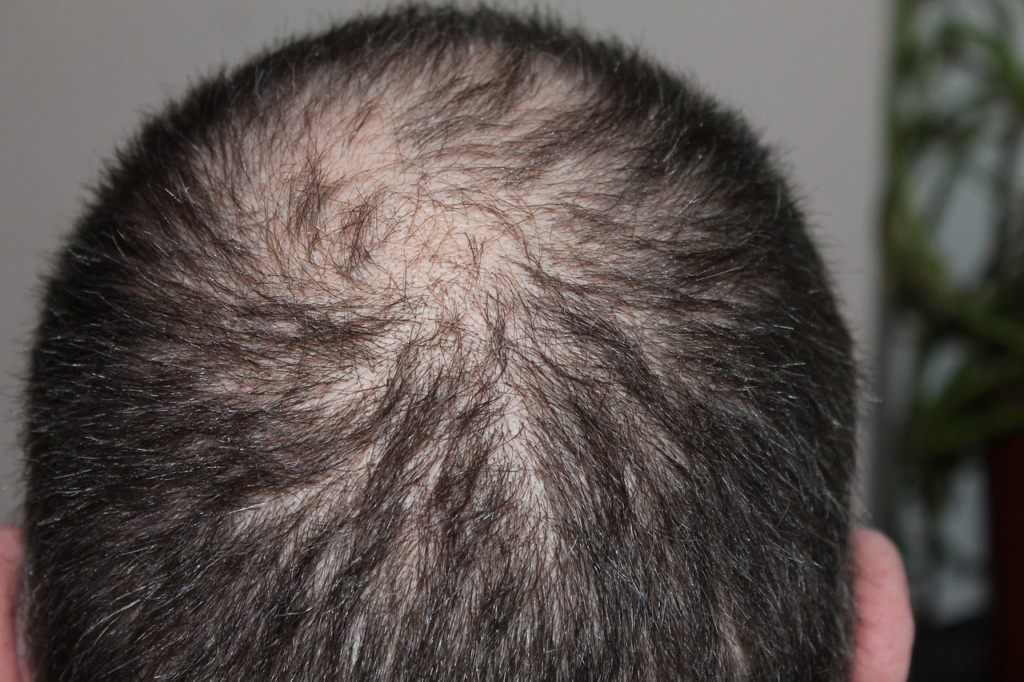
3. Thinning hair Please note: thinner hair along the hairline = warning signal.
Not only the position, but also the density of your hair changes. If you can see more scalp between the hairs, it's an important signal.
4. Miniaturized hair Finer, shorter, more fragile hair along your hairline?
These are miniaturized hairs, once strong, thick hairs that are now weakened. This happens when hair follicles shrink due to hormonal influences.
How to Start Inhammen? 🌱
Inlets usually develop gradually. The process often starts unnoticed:
- First phase: Subtle changes in hairline, especially at sleep
- Progression: Hairline withdraws further, forms clearer inlets
- Dilution: Hair gets thinner around the hairline
- Permanent change: Without intervention, the process continues
Important: The pace varies greatly per person. Some people are talking about years, others are talking about months.
What Are Beginning Inhamms? 🔬
Beginning inlets are recognized by:
- Light asymmetry in your hairline
- Visible thinner hair at sleep
- Small changes in the shape of your hairline
- More hair loss than usual (>100 hairs per day)
Early recognition = early intervention. And that significantly increases your chances of preservation and recovery.
Inlets at Men vs. Women 👫
Men: Male coves usually follow the "Norwood pattern":
- Start at sleep
- Formation of M-form or horseshoe shape
- Often combined with thinning crown
- Progression can lead to full baldness forkrant or crown
For men, it's usually genetically determined. Thank you, Grandpa! 💯
Women: It looks different to women:
- Usually general dilution across the scalp
- Maintaining the front hairline but broadening the separation
- Rare complete baldness, more often diffused hair loss
- Commonly hormonal (pregnancy, menopause)
The difference? Women experience less often the classic "M-shape" inlets, but more overall dilution.
Inlets at Young Age: 16 & 18 years 👦
PCOS Hair loss Guide
Evidence-based treatment protocols and scientifically-based therapies for PCOS-related alopecia
Pathophysiology of PCOS Hair loss
Scientific basis of hormonal hair loss mechanisms
Clinical Presentation Patterns
Recognition of different manifestations of PCOS alopecia
Treatment Response Timeline
Expected clinical response patterns and follow-up moments
🎯 Ernst Assessment Tool
Clinical stratification for personalised treatment plan
Early intervention
Combination therapy
Aggressive treatment
Is it normal to get coves at 16?
Short answer: It's possible, but it's not standard.
Some young men already see early signs of male baldness. This usually has to do with:
- Strong genetic predisposition
- Hormonal changes during puberty
- In rare cases: nutrition shortages or stress
Inlets at 18 years
At 18, your adult hairline begins to form. Many boys only now notice that their "child hair line" is changing to an adult form.
The difference:
- Adult hairline: A little higher, often with light coves
- Baldness pattern: Progressive reversal continuing
Are you questioning me? Compare to family members or consult a dermatologist.
What age do you get Inhammen? .️
Not one answer is possible. It depends on:
- Genetics: Family history is #1 predictor
- Hormone balance: DHT levels affect hair loss
- Lifestyle: Stress, nutrition, care
Typical age groups:
- 18-29: Early signs, adult hairline formation
- 30-40: Most common period for clear coves
- 40+: Acceleration of existing hair loss
Important: Your adult hairline usually stabilizes in your early twenties. Changes after that often point to novice baldness.
How do you notice your baldness is starting to become? 🚨
Baldness usually starts subtle. Note these signals:
- More hair in your shower / on your pillow Do you see more hair in the drain? Normal loss: 50-100 hairs per day. More could indicate problematic hair loss.
- Harder to style Your hair doesn't hold well, your hair looks thinner, your scalp is more visible.
- Photos are telling the truth Compare photos from 1-2 years ago. Revealing!
- Divorces are widening Your divorce was barely visible, now you see clearly scalp.
Crucial question: "Does my hair change, or do I just age?"
The difference:
- Normal ageing: Gradual, symmetrical changes
- Baldness pattern: Progressive, often asymmetric changes that accelerate
Inlets Back Grow: The Truth 🌱
Can we really do it? Yes, but with reservations.
Results vary greatly per person. Successful approach usually requires combination of:
1. The "big three" treatment:
- Minoxidil (topic): Improves blood circulation, stimulates hair follicles
- Dermarolling: Microneedling activates natural growth processes
- Finasteride (oral): Remt DHT, main cause of male baldness
2. Timely action: The sooner you start, the better your results. Hair follicles that are inactive for too long can be permanently damaged.
3. Consistency is king: Daily application, months of patience. Results don't come overnight.
Realistic perspective:
- After 3-6 months: Less hair loss
- After 6-12 months: Possible first new growth
- After 12+ months: Maximum results visible
Watch out for false promises. There's no miracle cure that works overnight.
Practical Steps Against Beginning Inhamms 🛠️
Take action? Here's your step-by-step plan:
1. Diagnosis first Consult a dermatologist or hair transplant specialist for professional evaluation. Self-diagnosis can be misleading.
2. Optimize lifestyle
- Nutrition: Protein rich, vitamins (B, D, E), minerals ( zinc, iron)
- Stress: Chronic stress increases cortisol = bad for her
- Care: Avoid aggressive products, heat, tight hairstyles
3. Consider treatment options Start with least invasive options:
- Topical treatment (minoxidil)
- Food supplements (biotin, zinc)
- Medication (finasteride)
- Advanced options: PRP therapy, laser therapy
- Last resort: Hair transplantation
4. Patience & Monitoring
- Keep track of progress with photolocators (same light/angle)
- Give treatments 6-12 months
- Adjust if necessary
5. Mental side not forgotten Your self-image is more than your hair. Acceptance can be liberating, even while working on solutions.
The Psychological Impact of Inhammen: More Than Haar 🧠
Let's deal with the real problem. You're losing her? This gets deeper than just looks.
Why it hurts:
- 76% of men with hair loss feel less attractive
- Social fear is increasing
- Self-confidence is falling
Reality check: Your identity, your hair.
The mental conversion:
- Accept your emotions (they are legitimate)
- Challenge negative thoughts
- Focus on what you can control
Pro tip: Stop staring obsessively in the mirror. Daily check = mental torture.
Successful hair treatment starts with a healthy mindset.
Treat and scalp and head. Both are crucial to real recovery. 💯
FAQ About Inhammen ❓
Is an uneven hairline always problematic? No. Asymmetry is normal to some extent. Progressive change is the real warning signal.
Does a withdrawn hairline always mean male baldness? Not necessarily. Some people develop a mature hairline with light inlets without further progression.
How much hair do you normally lose a day? 50-100 hair is normal due to natural renewal cycle. More could indicate excessive hair loss.
Can stress cause inlets? Acute stress can temporally worsen hair loss (teal effluvium), but rarely causes permanent inlets.

Conclusion: Knowledge = Strength 💪
Inlets can be disturbing, but remember:
- Early detection allows effective intervention
- Not all inlets lead to complete baldness
- There are proven effective treatments
- Consistency is essential to result
Stay proactive, stay informed, and take control of your hair health. Whether you choose treatment or acceptance an informed choice is always the best choice.
Take good care of what you got, and remember: her or no hair.
Note: This Article is intended for information purposes. Always consult a medical professional for personal advice on hair loss..


You might like this too.

What do women find more attractive when it comes to her? Bald or big hairdos?
Six Months Hair Transformation with Durasteride, RU 58841 and Oral Minoxidil


